
The License Level South Carolina
Requires for Commercial Work
A commercial septic system does the same job as a house system, but it is sized from the building’s actual daily water use rather than a bedroom count — and past 1,500 gallons a day, South Carolina requires a licensed professional engineer to design it. RO Unlimited holds a South Carolina Tier 2 onsite wastewater license, which is the level that state requires for commercial systems, large systems, pump systems, grease traps, and repairs. A Tier 1 installer cannot legally touch any of it. We are licensed across the tri-state, so when the parcel sits over in North Carolina or Georgia we run it through that state’s onsite program instead.
Tier 2 Commercial Septic Systems
Guide
What It Is
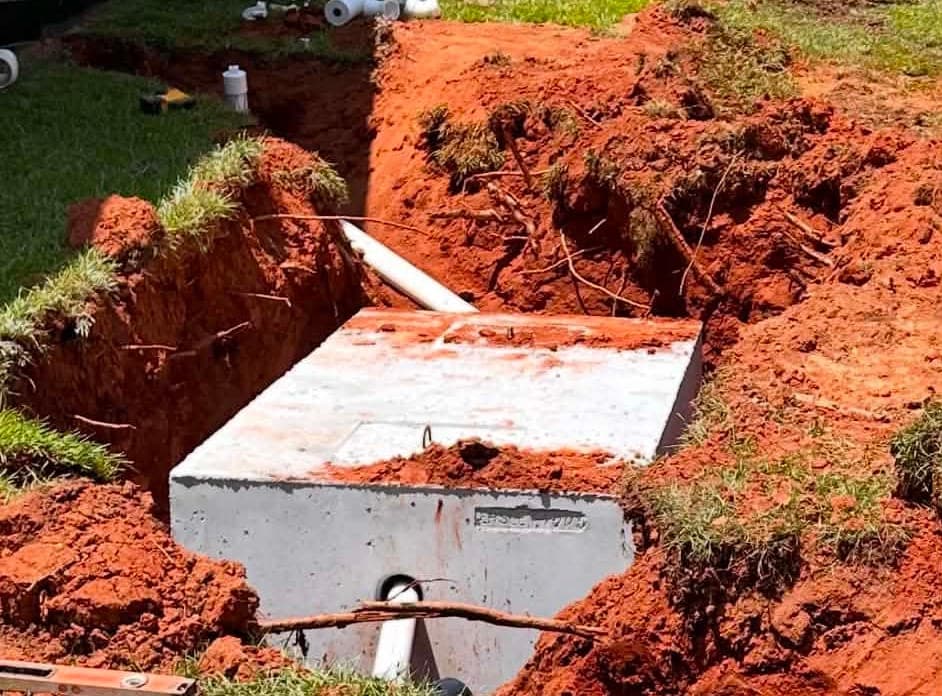
A watertight tank holds solids while liquid soaks into the soil, where microbes finish the treatment. That much is the same as a house. What changes on a commercial site is the sizing basis and the hardware. Design flow comes off an occupancy table — 40 gallons per seat per day for a full-service restaurant, 15 per employee per shift for an office, 100 per hotel room — not off bedrooms. South Carolina draws a hard line at 1,500 gallons per day: below it is a small system, above it is a large system that a South Carolina licensed professional engineer must design. Commercial systems also add parts a house never needs — a grease trap ahead of the tank for any kitchen, duplex pumps, pressure-dosed distribution — because commercial waste is stronger and arrives in sharper peaks.
When You Need It
A lot of the ground we work never gets sewer — rural Pickens, Oconee, and Anderson, the outer edges of Greenville County, and most of the mountain and farm country over the lines in North Carolina and Georgia — so any new build out there starts here. The trigger that catches owners out is change of use: South Carolina regulation requires a new permit to construct before any alteration that increases flow or changes the character of the wastewater. A retail bay at 15 gallons per employee becoming a restaurant at 40 gallons per seat can multiply the design flow tenfold and push the project over the engineering threshold overnight. Also worth knowing before you plan anything — South Carolina prohibits new septic permits, and even repairs, where a sewer treatment facility is "accessible for connection." The county or municipality decides what counts as accessible, and if connecting would require annexation or an easement across someone else’s land, it is not considered accessible.
Planning It Out
We quote commercial systems from the soil report, not from a price list, and we would treat anyone who does otherwise with suspicion — the soil dictates the size of the field, and the field dominates the cost. Design flow sets the tank and the pumps. Soil acceptance rate sets the trench footage, and on Piedmont red clay that footage is the entire conversation. In South Carolina the state fees are published and firm: a site evaluation fee, a treatment facility construction permit fee, a pump station permit fee, and an annual fee to operate a land application permit. Those are yours regardless of who installs the system, and we carry the current schedule into the estimate. On schedule, a straightforward commercial system on decent soil is a one to three month permitting exercise. A large system using low pressure pipe or drip distribution is a six to nine month exercise before you break ground, because the land application permit carries a 180-day statutory review clock that runs first. Once issued, a South Carolina onsite permit is good for five years. North Carolina and Georgia permit onsite systems through their own state and county health programs, with their own fees and their own clocks, so the first thing we pin down is which state the parcel is in — the design changes with it.
Why It Matters Here
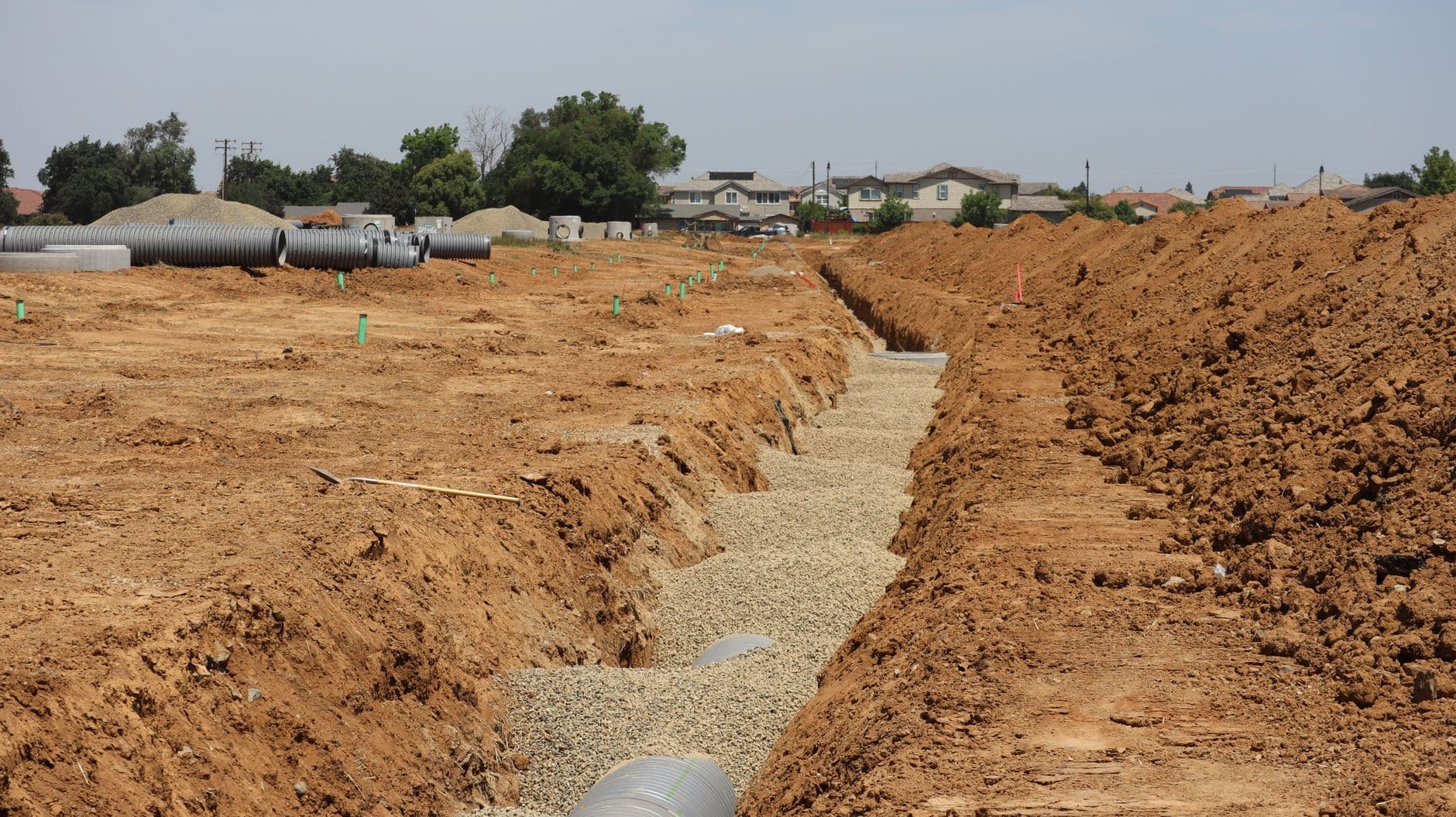
Three facts change everything about this work on our home ground, and two of them are South Carolina law specifically. First, South Carolina requires backhoe pits above the Fall Line that separates the Piedmont from the Coastal Plain — Pickens, Greenville, Oconee, and Anderson all sit above it, so every site evaluation up here needs an excavator on site, unlike the Lowcountry. Second, South Carolina does not use percolation tests at all; the word does not appear in the regulation. Sizing is done on soil morphology by certified staff or a licensed soil classifier. Out-of-state developers routinely arrive asking for a perc test — and North Carolina and Georgia do evaluate and permit onsite systems their own way, which is exactly why the answer depends on which side of the line your parcel sits. Third, the geology does not care about state lines. Red clay is expensive everywhere in the Piedmont: sand accepts 0.9 to 1.0 gallons per square foot per day, while clay accepts 0.1 to 0.4. A 600-gallon-per-day office needs about 200 feet of trench on sand and roughly 1,000 feet on our clay — five times the field, plus a 50% reserve area on top. South Carolina even publishes a system standard written specifically for expansive Piedmont clay, using the weathered saprolite below it.
Tier 2 Commercial Septic Systems Gallery
Warning
Signs
Standing water, spongy ground, or a bright green stripe over the drainfield
That stripe is effluent surfacing and fertilizing the grass from below. Discharging effluent to the ground surface is a violation, and on a commercial property it is a public health exposure with customers walking across it.
A high-water alarm at the pump panel, even one that silences itself
South Carolina requires that alarm wired ahead of the pump’s overload protection precisely so it still works when the pump does not. Intermittent alarms mean a failing float, a stuck check valve, or a pump near the end of its life — and you have about one pump-tank volume of storage before it backs up inside the building.
Any change of use, added seating, or new kitchen
A permit is required before the alteration, not after. Adding a kitchen to a space permitted as retail can multiply design flow tenfold and put you over the threshold where an engineer must design the system.
Trucks, trailers, or dumpsters parking on the drainfield
State rule prohibits the system under a driveway or parking area. One loaded delivery truck can crush distribution pipe and destroy soil structure in a strip that never recovers — and the fix is rebuilding that section, not patching it.
Building-wide slow drains or odor, especially after rain
Building-wide rather than one fixture points at the system, not the plumbing. A correlation with weather suggests a seasonal high water table eating your vertical separation, or roof and surface water being routed onto the field.
A grease trap nobody can remember pumping
Once grease and solids reach about a quarter of the liquid depth the trap has stopped separating. Grease then moves into the tank and out into the trenches, where it coats the soil surface and cannot be flushed back out.
Maintenance
Tips
Our
Process
Establish the Real Design Flow
Pull the number from the state occupancy table by seat, room, employee, or student count — everything downstream is sized off this one figure.
Soil Evaluation
Certified staff or a licensed professional soil classifier evaluates the soil — and in South Carolina, above the Fall Line, that means backhoe pits rather than hand borings.
Determine the Regulatory Track
Under 1,500 gallons per day on a standard design, over 1,500 requiring a sealed engineered design, or advanced treatment that also needs a land application permit with its 180-day clock.
Design & Stamp
Size the field from the soil’s acceptance rate, the tank and grease trap from the state formulas, the pumps from the flow, and lay out the reserve area.
Submit & Permit
Pay the site evaluation fee, file through state ePermitting, and build the statutory review clocks into the construction schedule rather than discovering them.
Install Exactly to the Permit
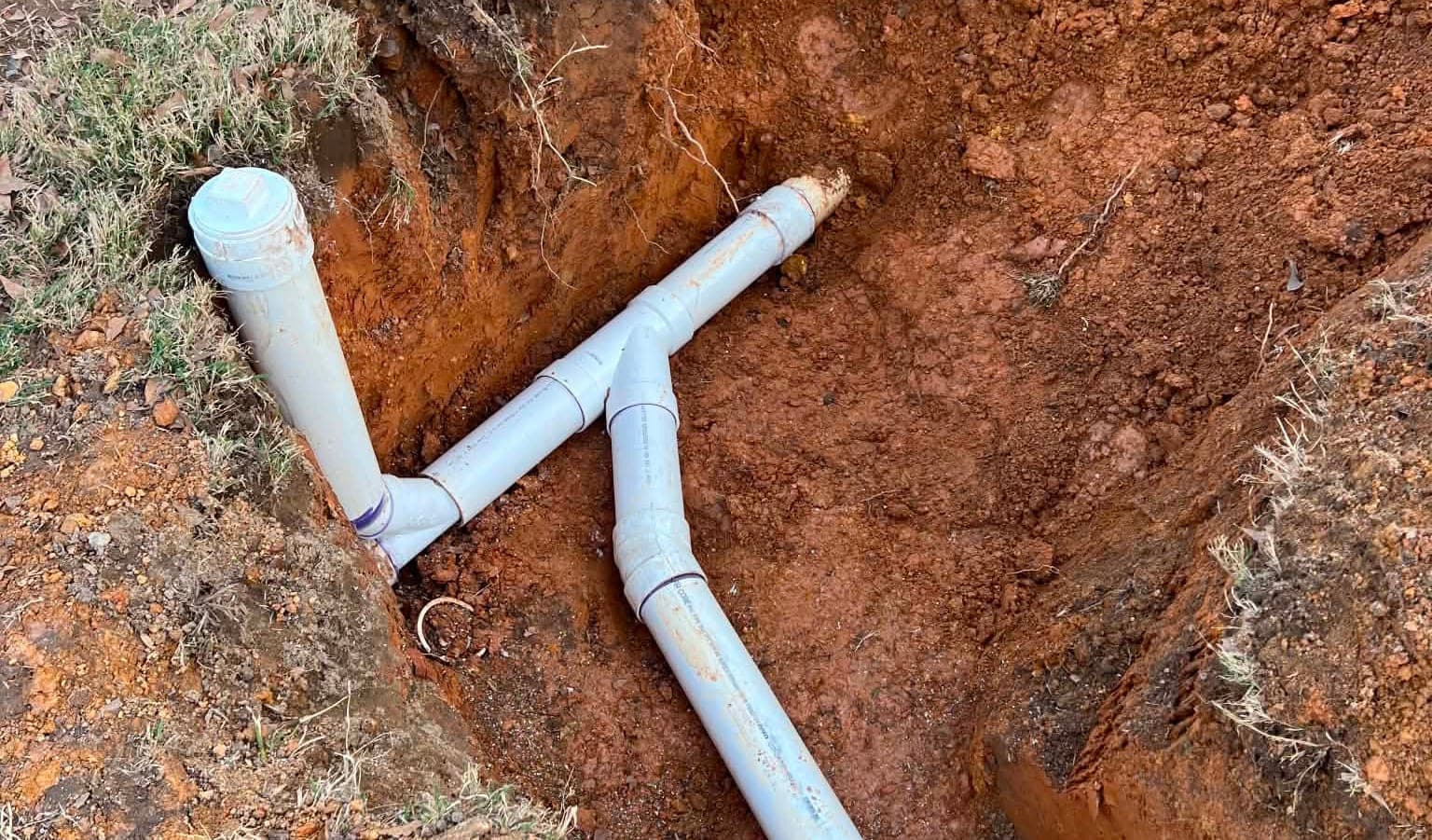
Watertight tanks, solid Schedule 40 connections, seven feet of undisturbed earth between trenches, trench bottoms level within two inches, force mains encased under any drive or parking.
Final Inspection
The state inspects — or the engineer inspects their own design where one was required — and as-built documentation is due within two business days of completion.
Approval to Operate
Receive approval to operate, and start the maintenance file on day one rather than after the first backup.
What Drives the Number
Prices are estimates for Upstate SC — get a real quote for your project.
FAQ
Explore More
Get Your
Quote
Call us directly or request a quote online. No pressure, no upselling — just honest answers about your tier 2 commercial septic systems needs.
(864) 304-0139