
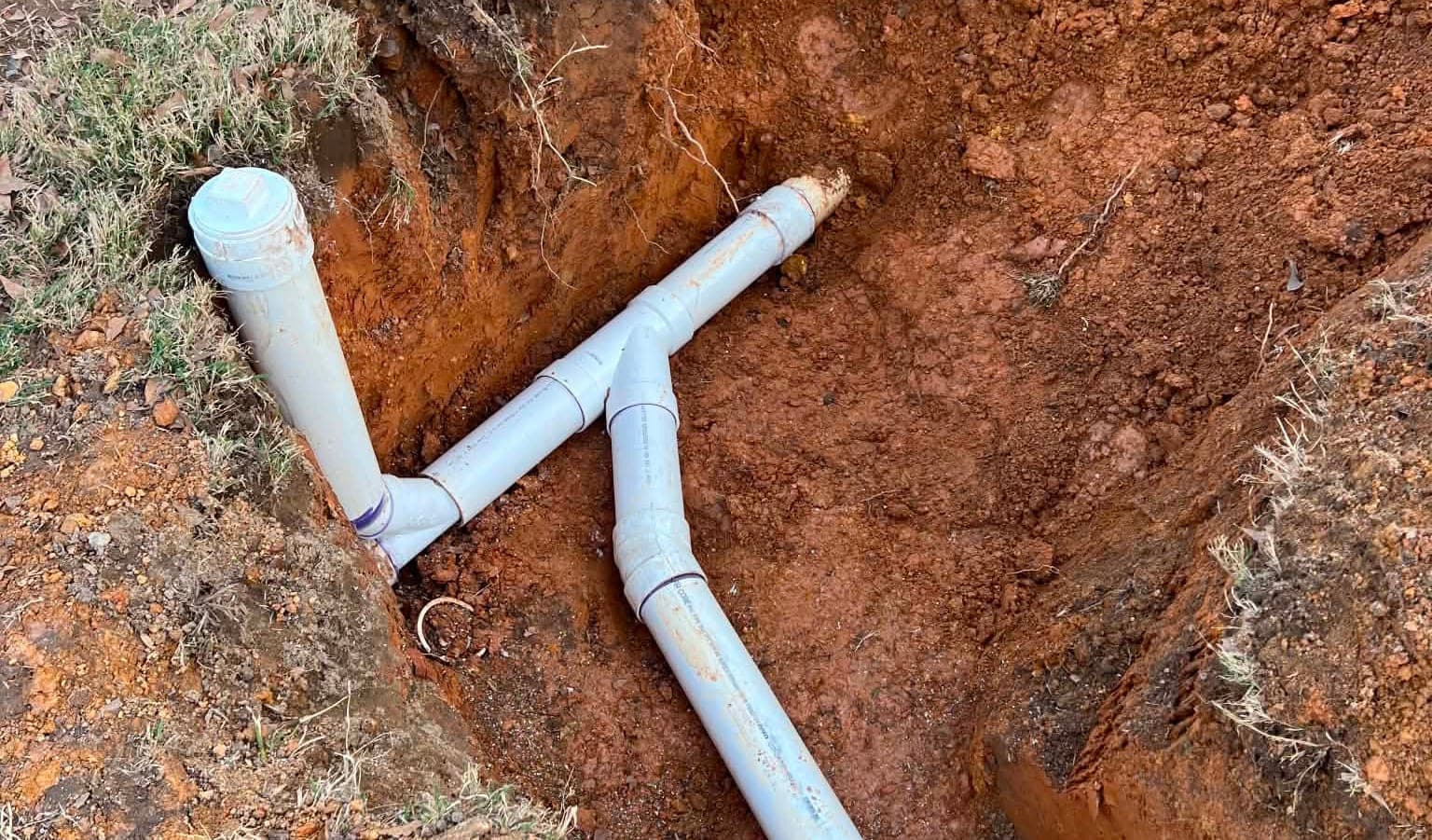
Gravity Mains, Laterals and Manholes —
Graded Right the First Time
A commercial sanitary sewer is three things working together: laterals running from each building, a gravity main collecting them, and manholes at every bend and junction so the line can be inspected, cleaned, and cameraed for the next fifty years. It all runs on gravity, which means every inch of fall matters. RO Unlimited builds to whichever sewer authority owns the line you tie into — ReWa around Greenville, OJRSA out in Oconee, the county and city systems over in North Carolina and Georgia — and to the state permit that goes with it. We test it, camera it, and hand you the closeout package.
Sanitary Sewer Installation
Guide
What It Is
Everything that goes down a toilet, sink, floor drain, or grease trap leaves the building through a lateral, joins a gravity main — eight inches and up — and travels to the treatment plant without a single pump, purely on fall. Manholes are the round concrete access shafts placed at every bend, size change, grade change, and intersection, and they exist so crews can inspect and clean the line. Where the ground runs out of fall, you need a lift station: a wet well with pumps that lifts the wastewater and pushes it through a pressurized force main until gravity can take over again. Sanitary is never combined with storm drainage — during heavy rain a combined system overflows raw sewage into the creek, which is why new ones have not been permitted in generations.
When You Need It
New buildings and new pads are obvious. The one that catches owners out is a change of use: a retail shell becoming a restaurant, or a warehouse becoming manufacturing, triggers a fresh capacity calculation and impact fee even when the pipe is already in the ground. The single biggest budget surprise on rolling foothills ground — and that is most of what we work — is elevation. If the lowest fixture on your site cannot drain by gravity down to the tie-in manhole’s invert, you need a lift station, and a lift station is not a line item you absorb quietly. It brings pumps, a wet well, a control panel, standby power, a force main, and a permanent operating obligation with it. After that it comes down to whose rules you are under, and they are not interchangeable. OJRSA out in Oconee County, for instance, requires service lines larger than four inches to connect at a manhole rather than tap the pipe, and multi-family over four units to take a minimum eight-inch service. ReWa has its own list, and so does every authority across the North Carolina and Georgia lines. Read the right one before you draw the profile.
What It Takes
Depth and rock decide almost everything on a gravity sewer. Eight-inch PVC in open ground at normal depth is your baseline number; go deeper than twelve feet, hit rock, or work under existing pavement and the per-foot figure multiplies, because rock is priced by the cubic yard and it is the most expensive dirt on any site. Manholes price by depth — a standard four-foot structure under ten feet is routine work, while a deep one brings shoring, dewatering, and a crane with it. A duplex submersible lift station with generator, controls, and site work is a project inside your project, not an accessory to one. Budget the authority’s fees separately, because every one of them prices capacity its own way. OJRSA, in Oconee County, assesses by equivalent residential unit — 300 gallons per day each — or by the gallon for other uses; ReWa and the Greenville-area systems publish their own schedules, and so does every county we work in across the state lines. We pull the current numbers for your jurisdiction and build them into the estimate rather than leaving them as a surprise. On schedule: design and permitting is eight to twenty weeks, installation of a 400 to 800 foot run is one to three weeks in normal soil and three to six with rock, and then closeout takes another two to five. One constraint catches nearly every general contractor — the mandrel deflection test cannot be run until backfill has been in place at least thirty days.
Why It Matters Here
Everything we work sits on Piedmont geology — granite and gneiss under weathered saprolite and red clay whose thickness changes dramatically over short distances, and that is as true in Toccoa or Hendersonville as it is behind our shop in Easley. Rock depth is rarely predictable from a few borings, and a gravity sewer needing 0.40% fall cannot simply route around rock it finds sixty feet into a five-hundred-foot run without losing grade. Red clay compounds it: trench walls look stable dry and turn to soup after rain, and clay backfill placed wet consolidates later and pulls the pipe down into a belly. The rules laid over that geology are local, specific, and enforced to the letter. OJRSA is a fair example of how specific: an inspector notified no less than 48 hours before a connection, in-line hammer taps banned outright, manhole taps core-drilled and sealed with a rubber boot and rubberized plaster, mortar and cement explicitly not allowed. ReWa around Greenville has its own version of that list, and the authorities we build under in North Carolina and Georgia have theirs. A contractor who has not read the right one loses a day and a connection.
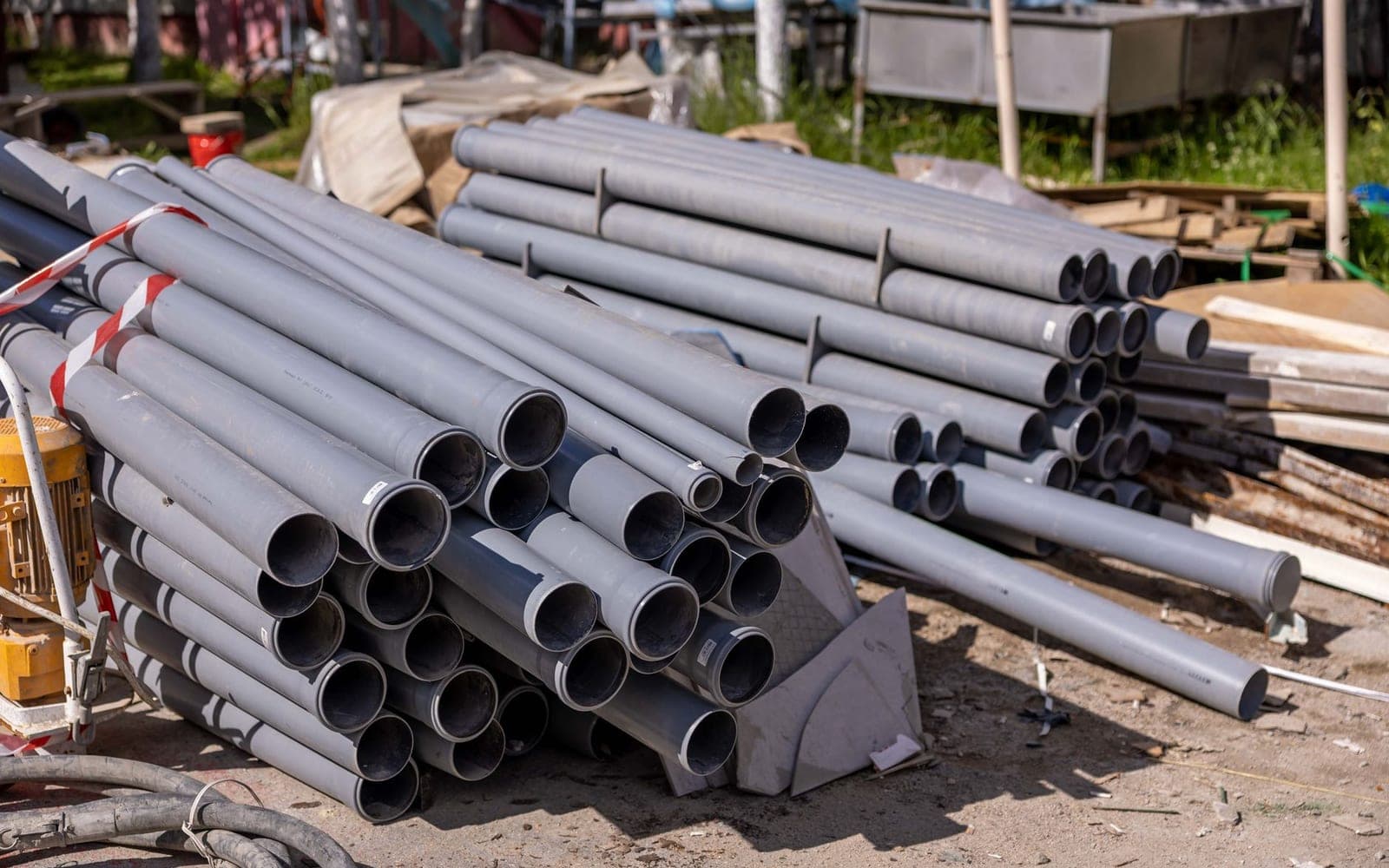
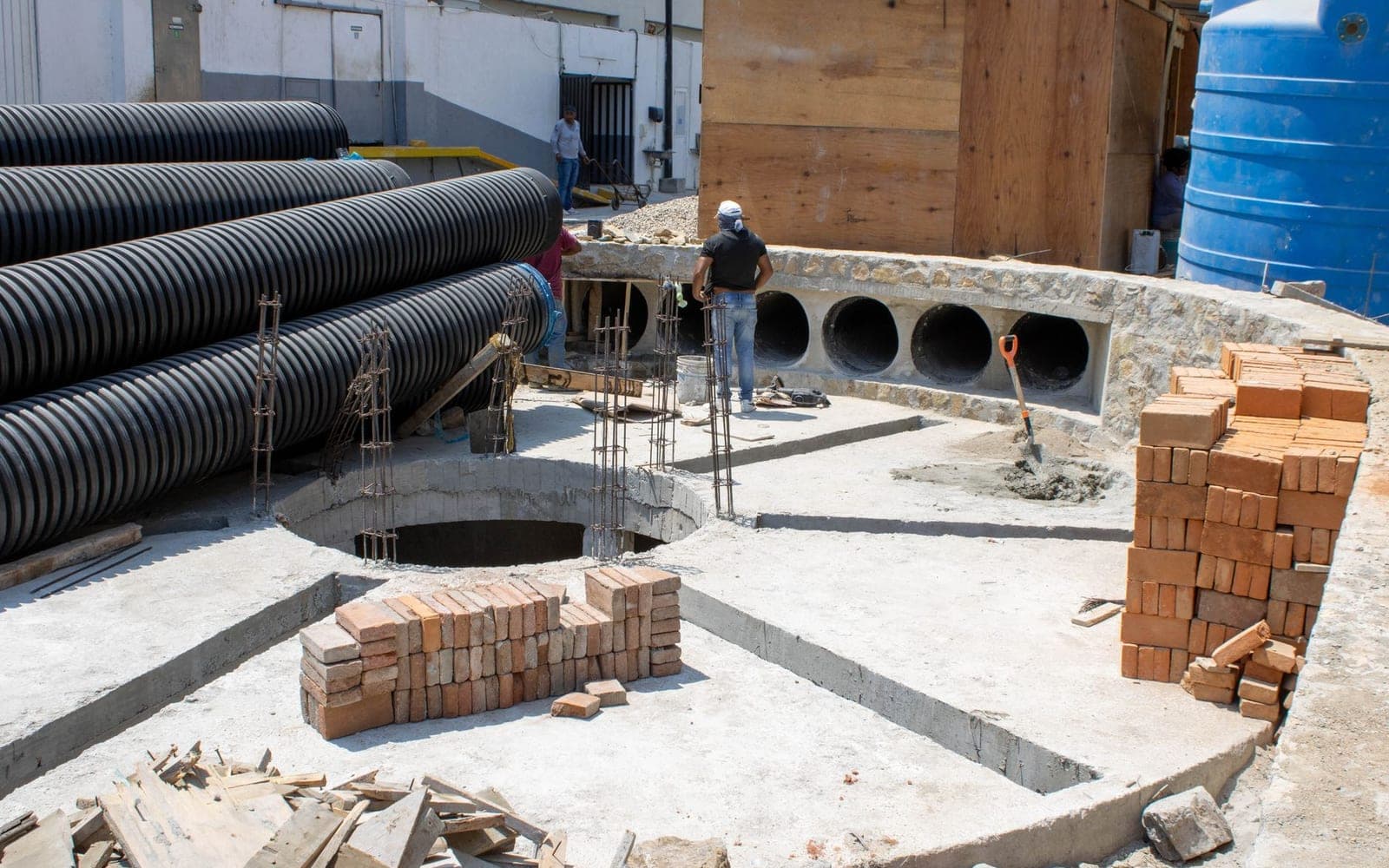
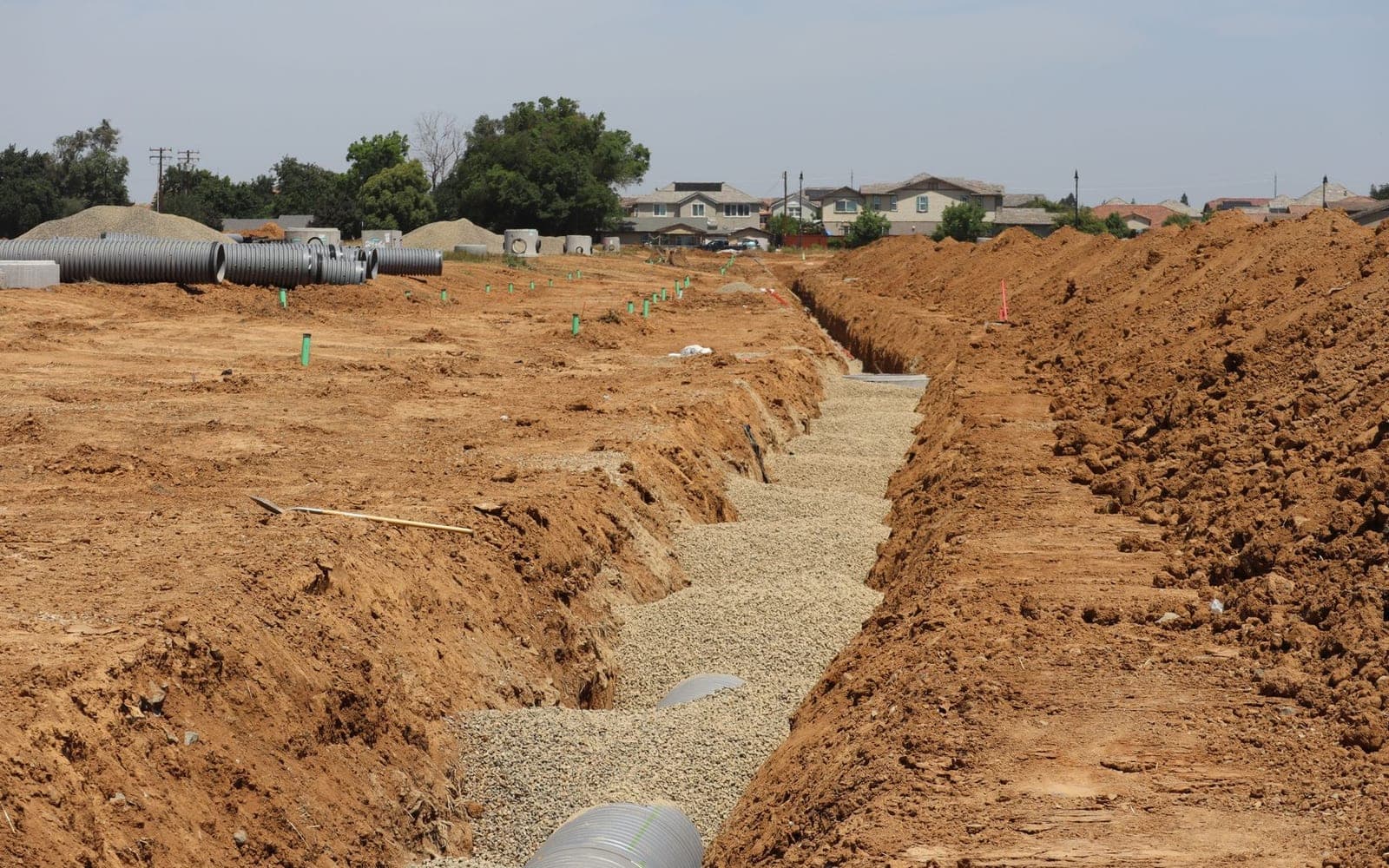
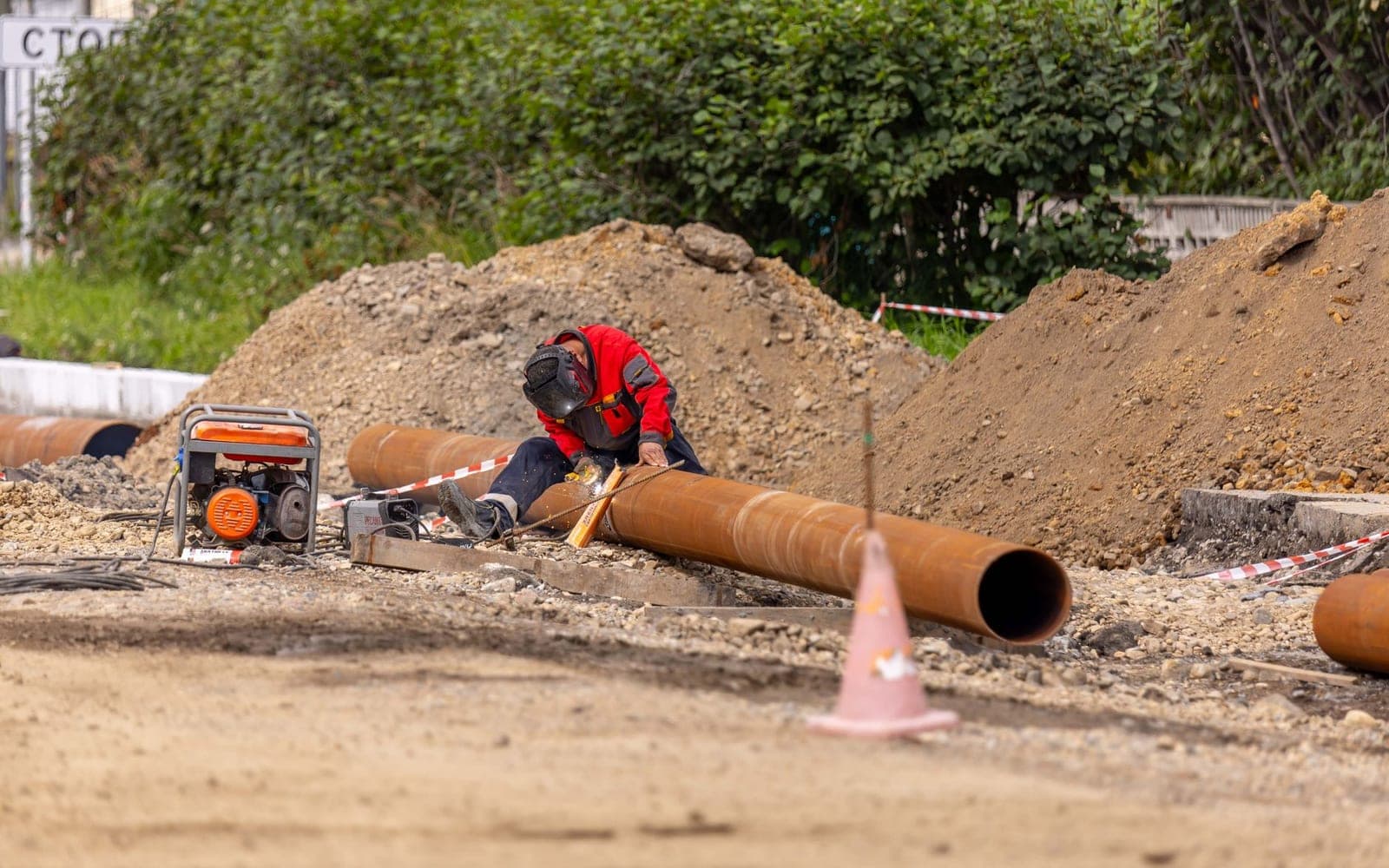
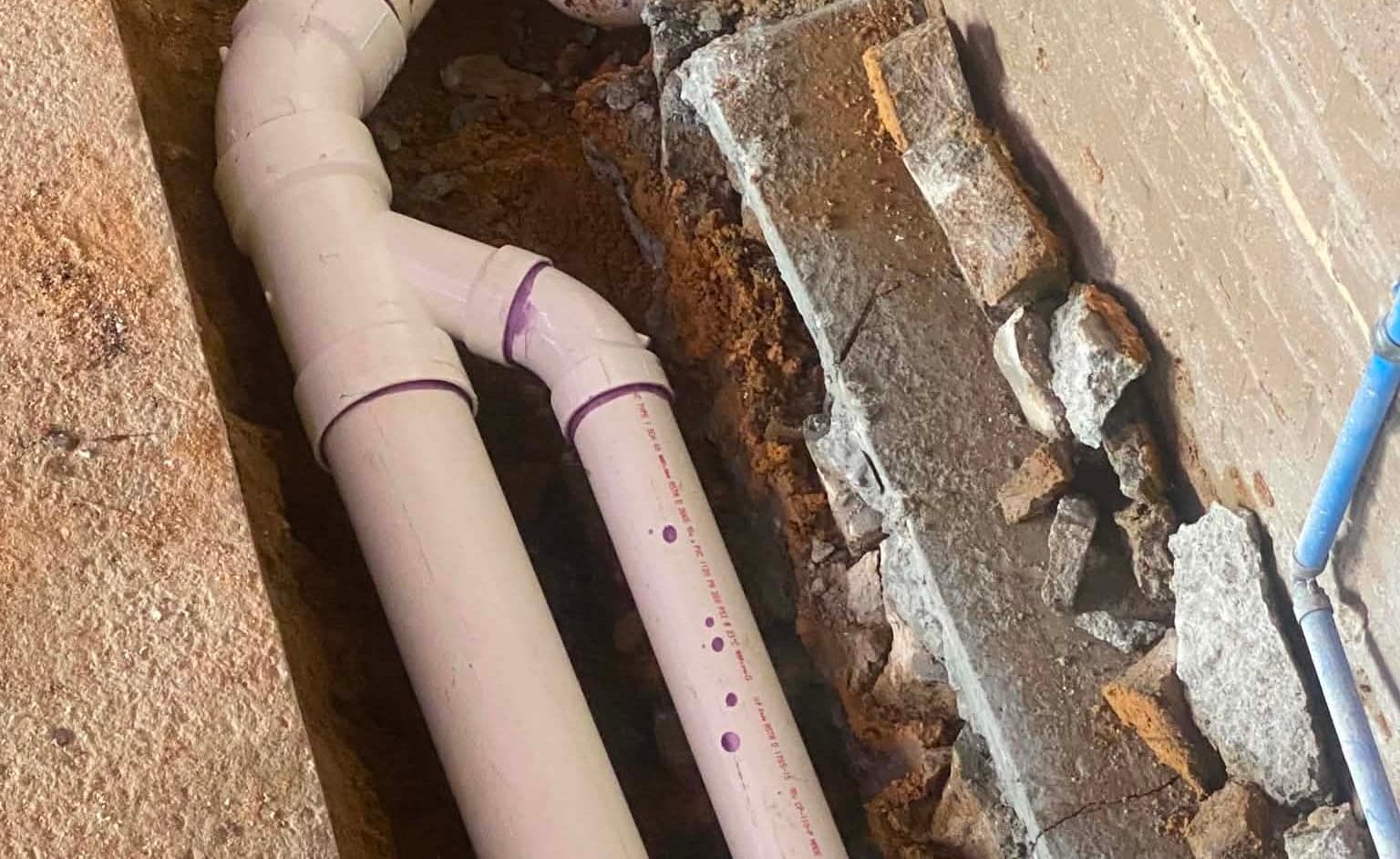
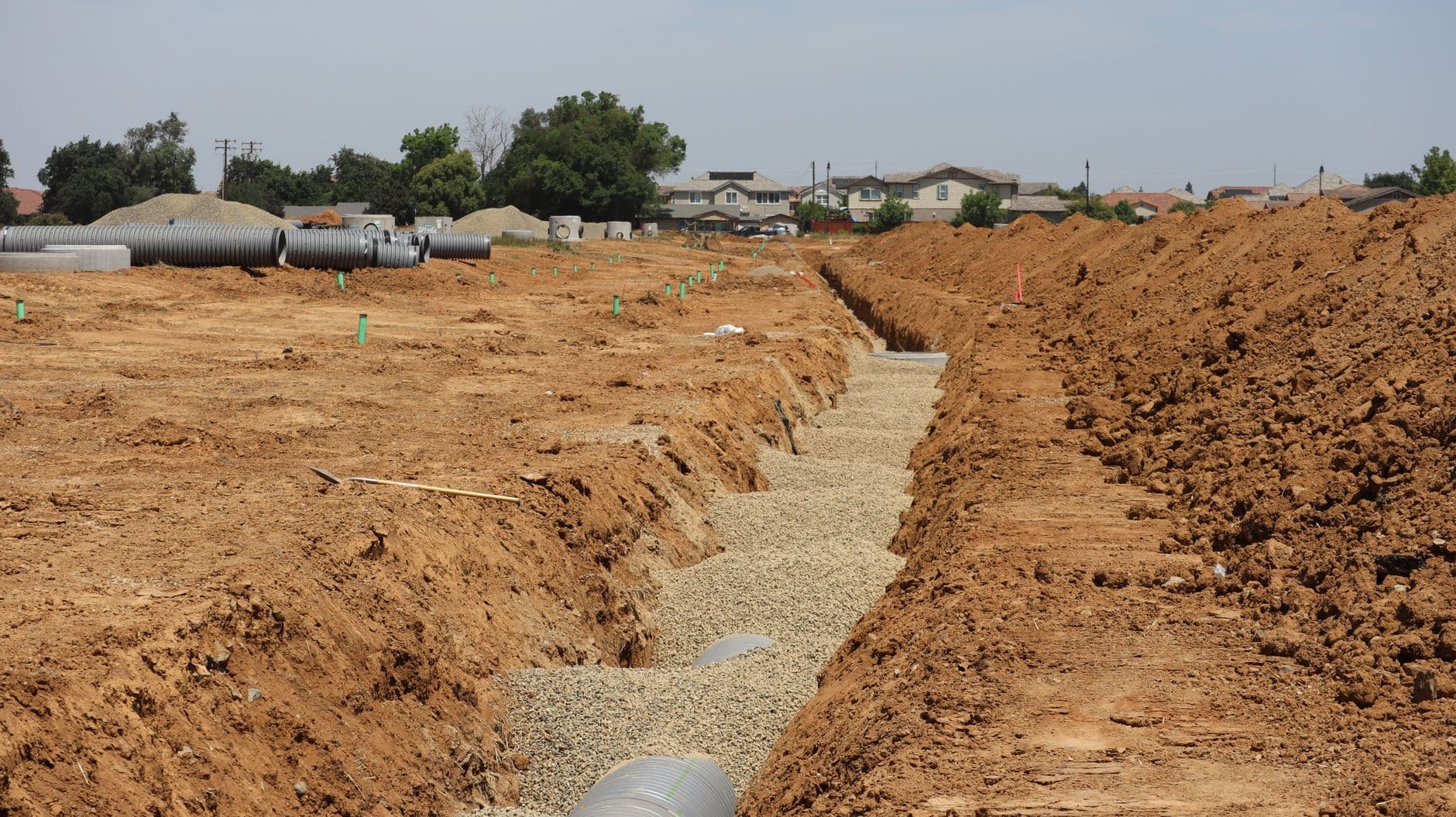
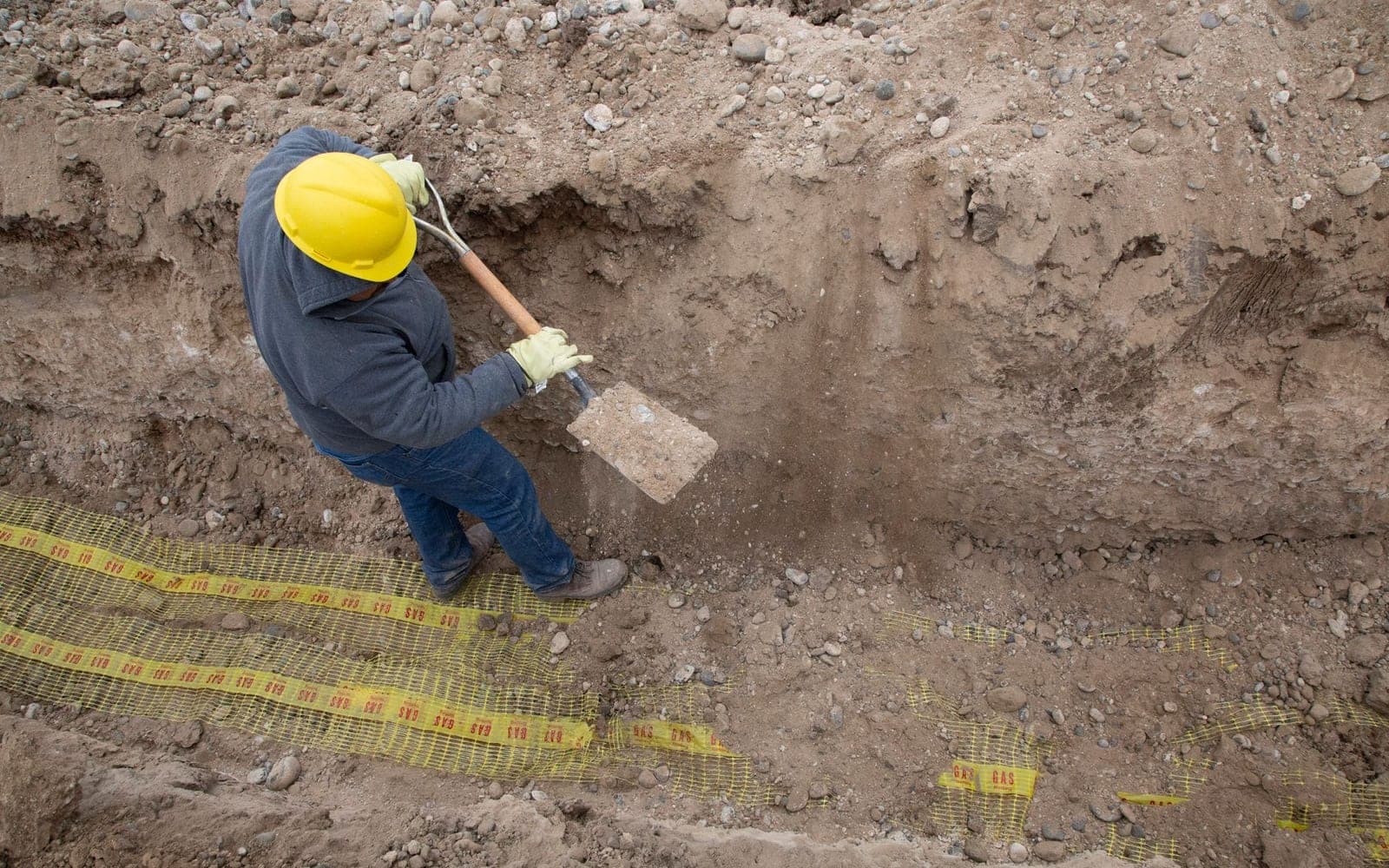
Sanitary Sewer Installation Gallery
Warning
Signs
A wet spot, sinkhole, or lush green stripe over the sewer line
That is the pipe leaking out — which means the same open joint lets groundwater and soil in when the water table rises. The soil washing into the pipe leaves a void that eventually collapses whatever is paved above it.
Backups that only happen during or right after heavy rain
A sanitary system should not care about rain. If it does, you have inflow and infiltration — a cracked lateral, a failed manhole seal, or a roof drain illegally tied into the sanitary system. It is a compliance exposure and it consumes treatment capacity you are paying for.
A manhole lid sitting below the pavement, rocking under traffic, or holding water
The frame-to-chimney seal is the most common infiltration entry point on a commercial site, and a ponded lid with vent holes is a direct stormwater intake straight into your sanitary system.
Repeat clogs in the same spot, or standing water mid-run on a camera report
That is a belly — a sag from settlement or bad bedding. It never clears itself. Solids drop out in the low spot and re-clog on a schedule, and the fix is excavation and re-laying, not jetting.
Roots in the camera footage
Roots enter at joints and defects and then act as a strainer for grease and wipes. Recurring root intrusion is telling you the joint is already open, not that you have a tree problem.
A lift station running noticeably more than it used to
Stations are sized to run no more than about ten hours a day normally. One running well past that is either taking on infiltration or has a failing pump — and it is now one power outage away from a sanitary sewer overflow.
Maintenance
Tips
Our
Process
Verify Capacity & Tie-In
Confirm the receiving main has allocation, pull the capacity and impact fee determination, and locate the tie-in invert — that elevation decides whether the site works on gravity or needs a lift station.
Engineer & Permit the Profile
A professional engineer lays out slopes, manhole locations, and depths; plans are signed and sealed for the SC DES construction permit — or the North Carolina or Georgia equivalent — plus the sewer authority’s own approval.
Locate, Protect & Lay Out
811 tickets through the center that covers the site, private locates, easement staking, and confirmation of the ten-foot horizontal separation from any potable water main.
Open Trench With Protection In Place
Trench box, shoring, or benching chosen by the competent person before anyone enters, with spoil kept back from the edge — required at five feet and engineered past twenty.
Set Bedding to Grade
Crushed stone bedding placed and struck to laser or GPS grade, with bell holes dug so the barrel of the pipe carries the load rather than the bell.
Lay Pipe Upstream to Downstream
Bell upgrade, each gasketed joint lubricated and homed, verified with a feeler gauge, holding uniform slope between manholes. Pipe gets laid in dry trench only.
Haunch, Backfill & Compact
Work stone under the haunches, then backfill in six-inch layers thoroughly tamped to at least eighteen inches of cover before heavier compaction goes over the top.
Test, Camera & Close Out
Low-pressure air test, manhole vacuum test, mandrel deflection test after thirty days, CCTV video, then sealed record drawings and the authority’s closeout package.
What Drives the Number
Prices are estimates for Upstate SC — get a real quote for your project.
FAQ
Explore More
Get Your
Quote
Call us directly or request a quote online. No pressure, no upselling — just honest answers about your sanitary sewer installation needs.
(864) 304-0139