
Domestic Service and Fire Mains,
Bedded and Tested to Spec
Once the tap is made, you still need pipe from the main to the building — usually two lines. A domestic service feeds restrooms, kitchens, and equipment. A private fire service main feeds the sprinkler system and any on-site hydrants, and it answers to the fire code rather than the water authority. RO Unlimited installs both in ductile iron and C900 PVC, bedded, restrained, pressure-tested, disinfected, and cleared for service.
Ductile Iron & C900 Water Lines
Guide
What It Is
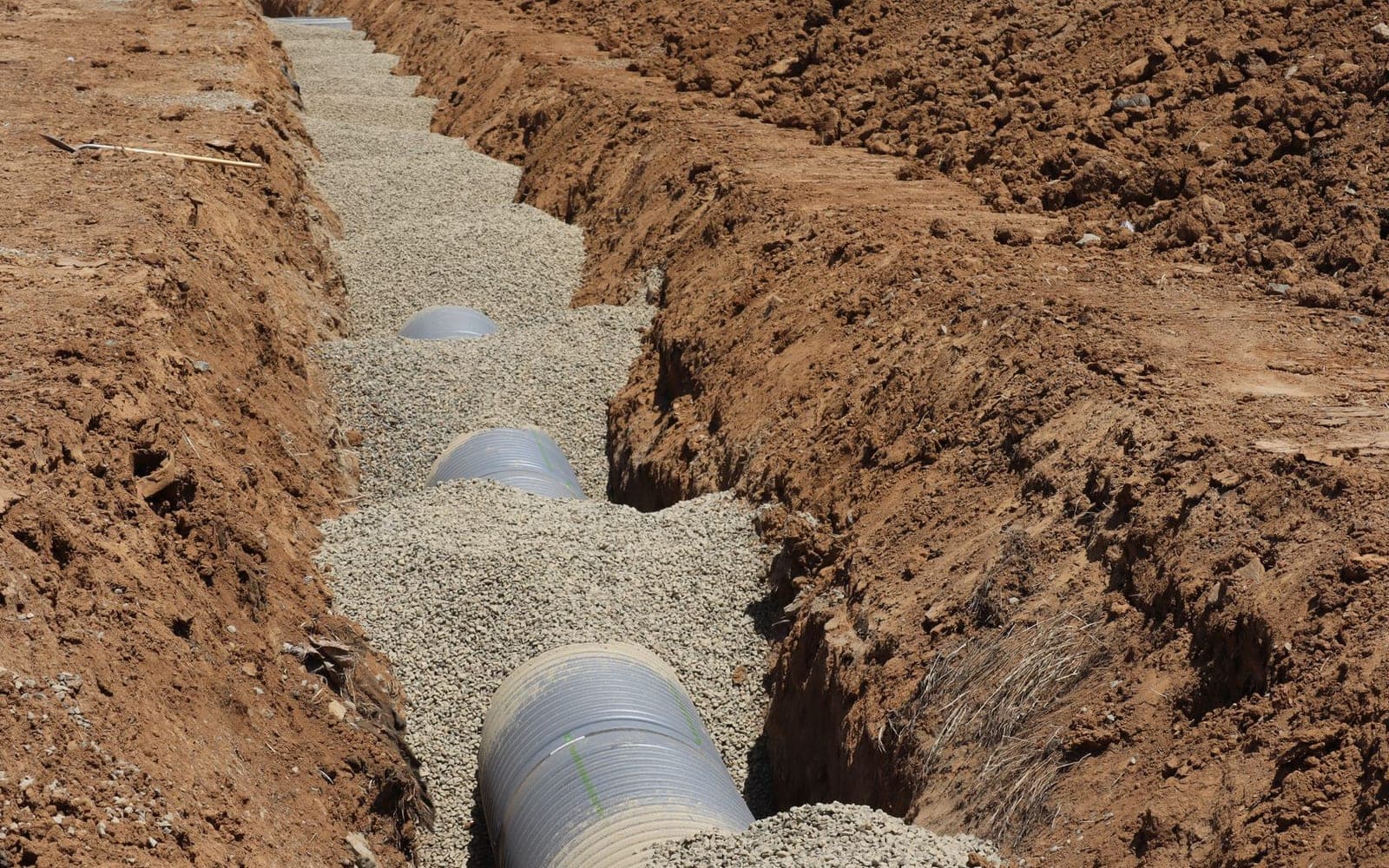
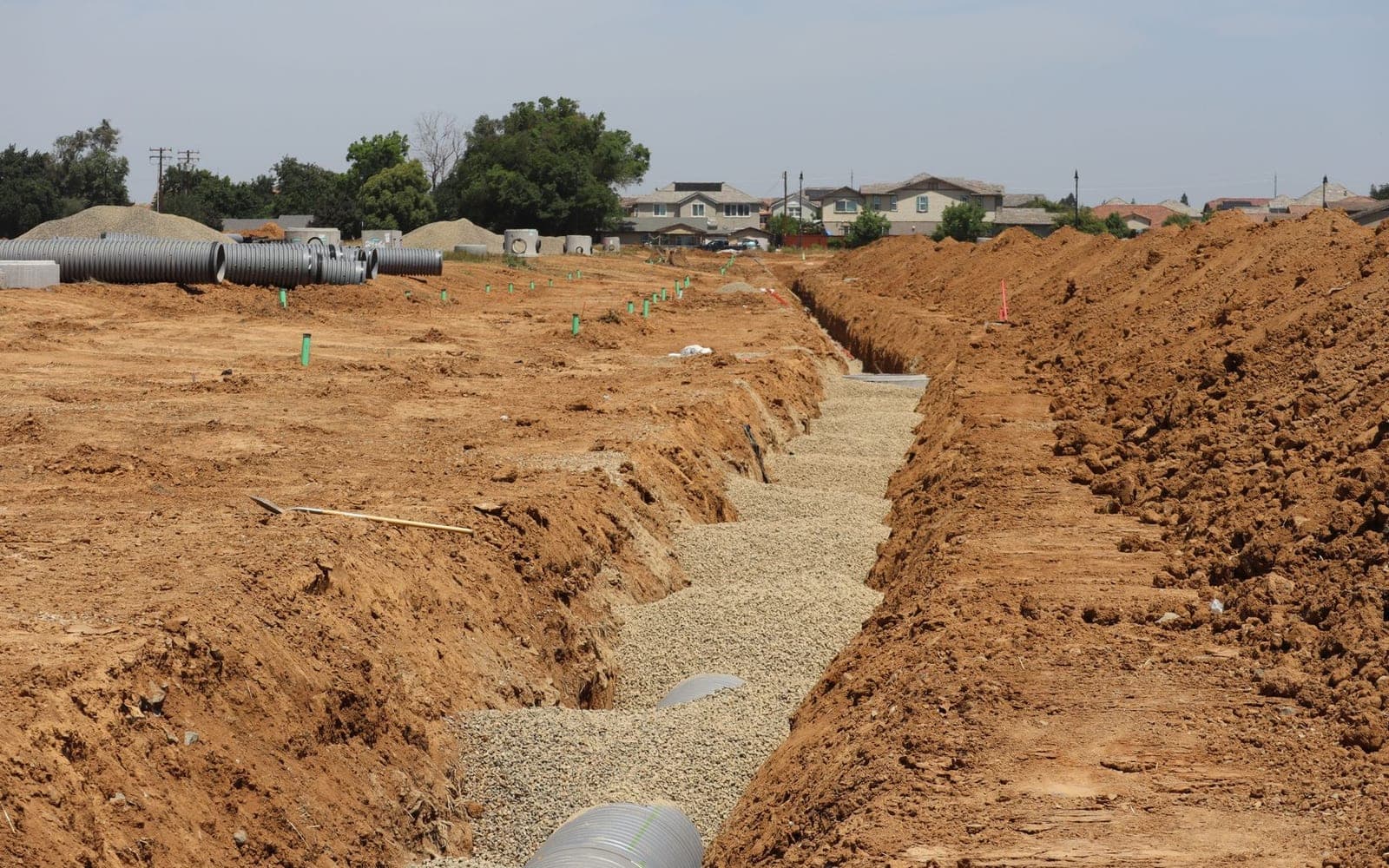
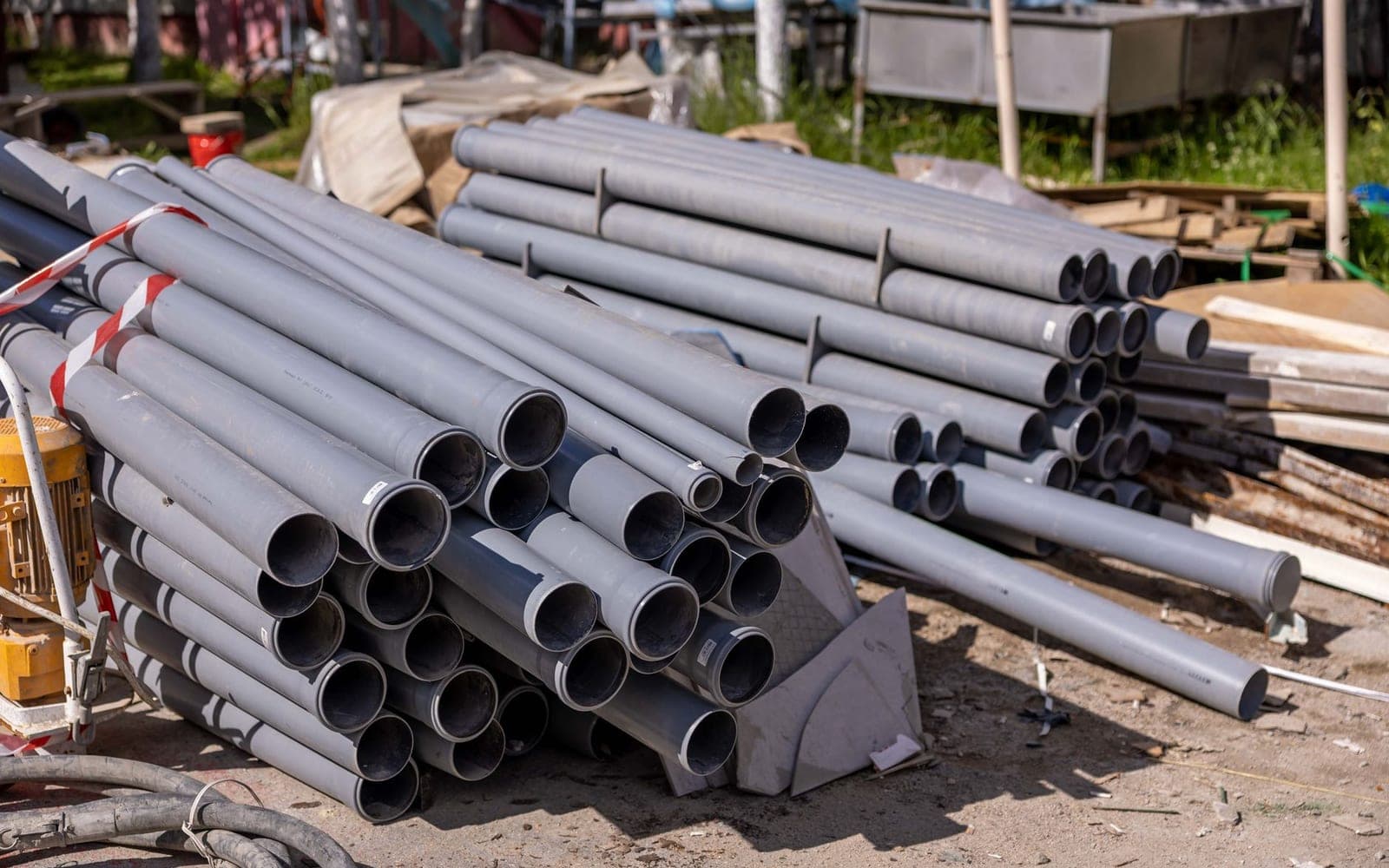
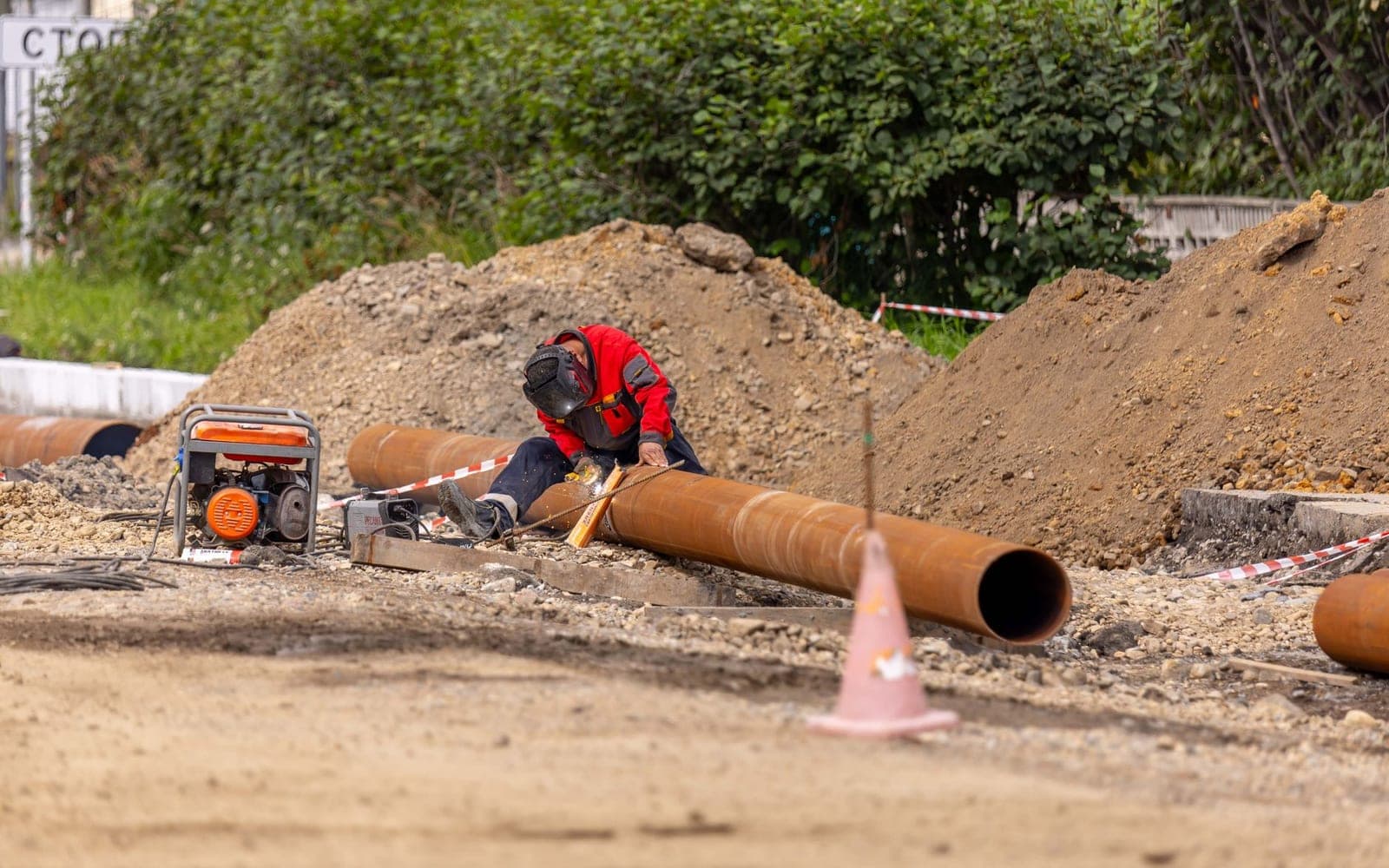
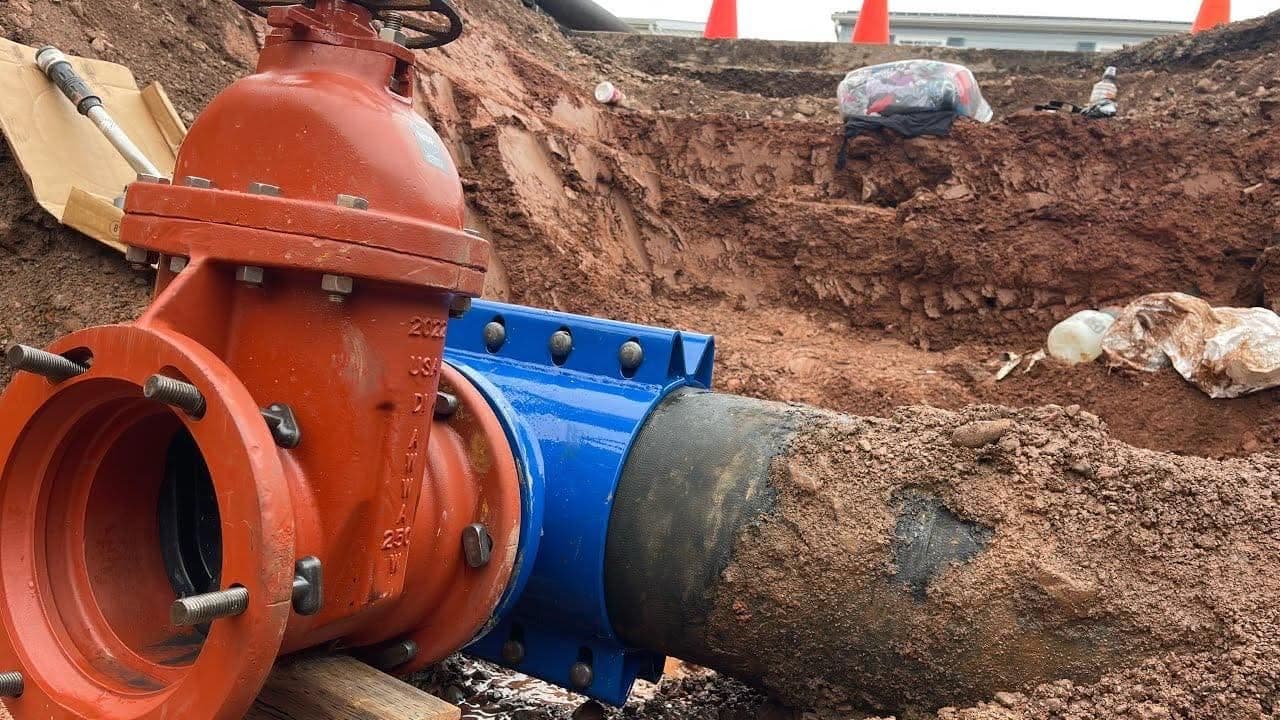
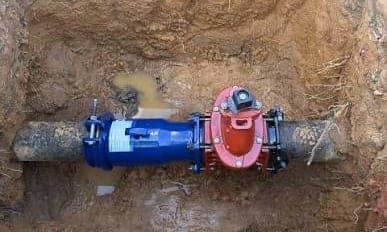
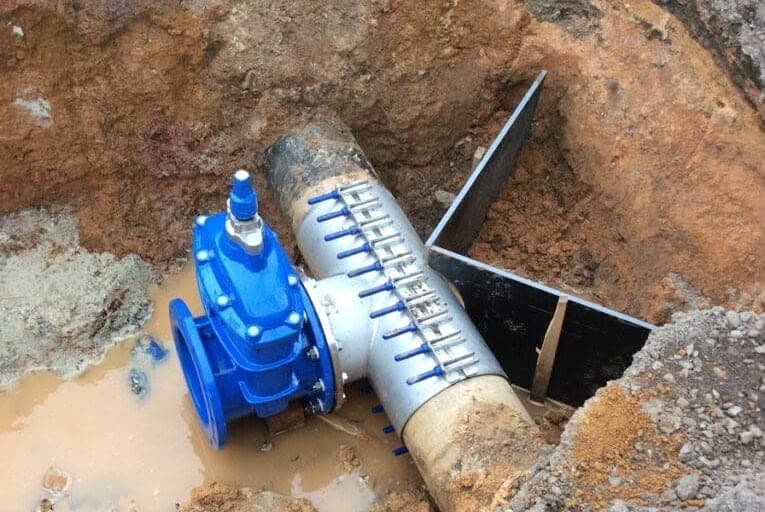
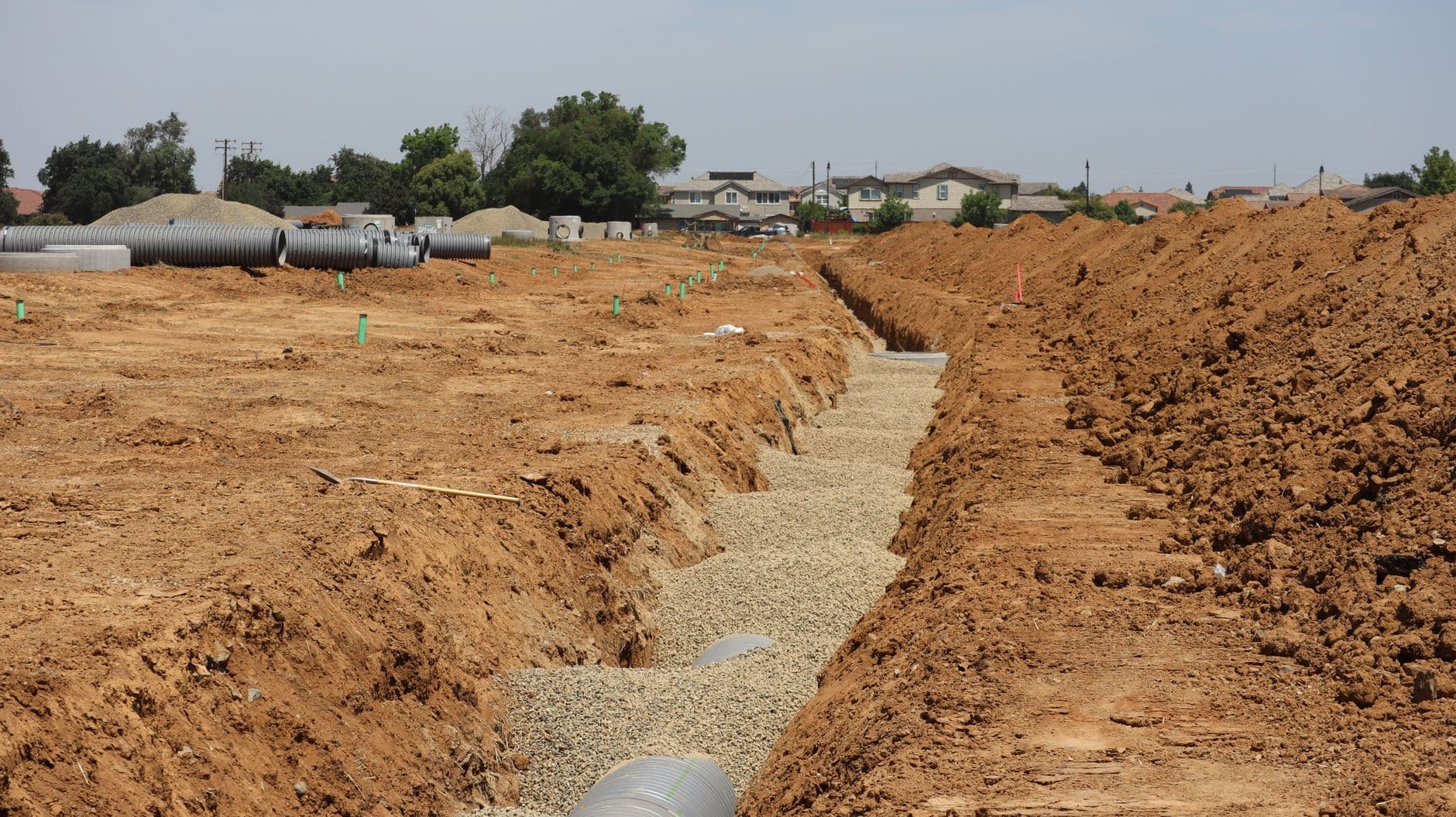
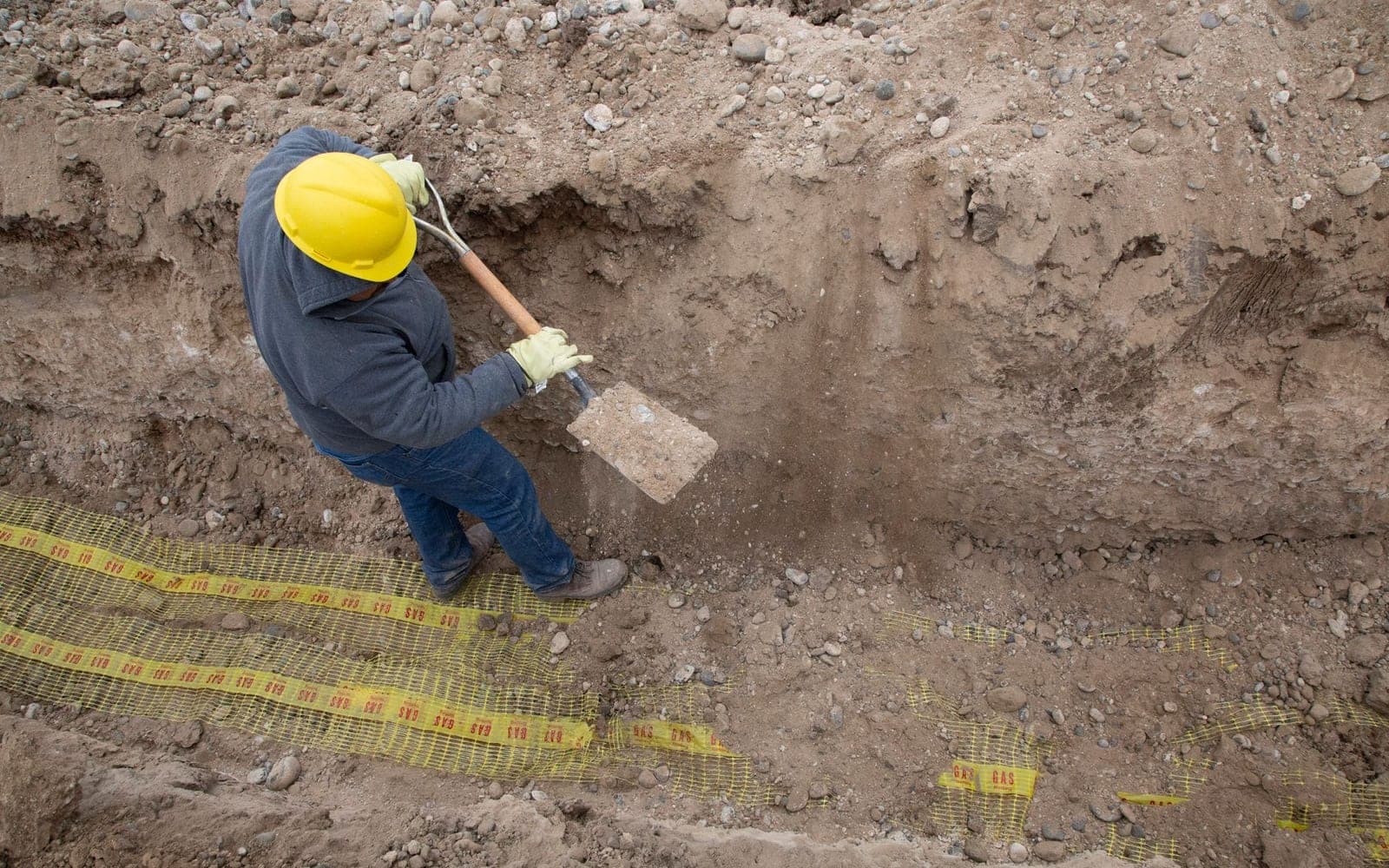
Two materials dominate commercial water service. Ductile iron pipe is cast iron with its graphite chemistry changed so the pipe bends instead of shattering — heavy, extremely strong, and cement-lined inside. C900 PVC is engineered plastic pressure pipe built to an AWWA standard, lighter and less costly per foot, immune to rusting from the inside, and made in different wall thicknesses for different pressures. Either one gets buried the same careful way: compacted stone under the pipe, stone worked into the haunches at its sides, adequate cover over the top, and copper tracer wire plus colored warning tape so the next contractor can find it. Anywhere the pipe turns or dead-ends, pressure tries to shove it apart, so those points get restrained with a thrust block or a mechanical restraint gland.
When You Need It
New construction is the obvious one — every commercial building needs a domestic service and most need a fire line. Beyond that: an expansion or added stories that push fixture count and sprinkler demand past what the existing service can supply; a fire marshal requiring a private fire main or an added hydrant; a high-demand tenant like a restaurant, brewery, laundry, or car wash; a failing service line showing repeated leaks, rusty water, or poor pressure on upper floors; site development work needing main extensions and hydrant loops; or a DOT road-widening project forcing your private line to be relocated.
Cost Drivers & Schedule
Conditions drive this far more than pipe does. Diameter and pressure class matter, but depth, shoring, rock, restoration, and the number of fittings matter more — a straight run in open ground prices well per foot; a run with six bends, two tees, a hydrant, and a backflow vault does not. Ductile iron material runs several times what C900 does per foot and is heavy enough to change the crew and the equipment on site. A straightforward 200 to 400 foot commercial service and fire line in workable clay is commonly a one to two week operation. What surprises general contractors is the tail end: hydrostatic testing, a 24 to 48 hour chlorine hold, flushing, then two sets of bacteria samples pulled at least sixteen hours apart plus lab turnaround. That is four to seven days minimum from pipe-in-the-ground to cleared-for-service, it cannot be compressed, and a failed sample restarts it. Put it in the schedule at bid time.
Why It Matters Here
Piedmont clay is often corrosive to ductile iron. The AWWA soil evaluation scores resistivity, pH, redox, sulfides, and moisture, and ten points or more means the pipe should be polyethylene-encased. Get that wrong and you have turned a hundred-year pipe into a maintenance problem — ductile iron in highly corrosive soil breaks roughly six times as often as it does in benign soil. Clay also shrinks and swells, which matters because thrust blocks only work when they bear against undisturbed soil; on most jobs in this ground restrained mechanical joints are the more reliable answer. Add shallow granite near the foothills, which means rock hammering and makes proper bedding non-negotiable, and trenches that hold water because clay will not drain — which affects compaction and the honesty of a pressure test. None of that stops at a state line. The paperwork does: the approved-materials list, the acceptance test, and the inspector all change from one authority to the next, and change again once the job is in North Carolina or Georgia. We build to whichever list governs, because we hold the license in all three.
Ductile Iron & C900 Water Lines Gallery
Warning
Signs
Pipe laid straight on the trench bottom or on rock
Bedding exists to give the pipe uniform support and bring it to grade. Without it you get point loading, and against Piedmont rock that is a crack waiting for the first pressure surge.
Backfill dumped over the pipe with no haunching
The haunch zone — from the bottom of the pipe up to its centerline — provides the most resistance to deflection. Skipping it is completely invisible from the surface and shows up later as deflection, joint stress, and failure.
A bend, tee, or dead end with no restraint or thrust block
Pressure pushes outward anywhere the direction or cross-section changes. An unrestrained fitting eventually separates — usually under the parking lot you just paved.
A thrust block poured against loose backfill
Blocks have to bear on undisturbed earth. Where that is not achievable the backfill between block and undisturbed soil has to be compacted to at least 90% Standard Proctor. A block bearing on fluff is decoration.
No tracer wire or marking tape on a PVC line
PVC is invisible to standard locating equipment. If the tracer wire is not installed, terminated, and continuity-tested, the next contractor on your site will find your water line with an excavator bucket.
A "passing" pressure test with no paperwork
Acceptance is quantitative — metered makeup water compared against the allowable-leakage formula, not "it looked fine." On the fire side, no signed contractor’s material and test certificate means no acceptance.
Anyone offering to skip disinfection because the line is clean
New mains get charged with chlorine, held, flushed, and lab-cleared for a reason. A failed bacteria sample discovered after backfill and paving is a genuinely expensive lesson.
Maintenance
Tips
Our
Process
Design & Material Selection
An engineer sizes domestic and fire lines for demand, fire flow, and available pressure, then specifies material and pressure class to match the authority’s approved-materials list.
Permits, Approvals & Locates
State construction permit for whichever state the site is in, water authority plan review and fees, fire marshal review of the private fire main, right-of-way encroachment permits, and an 811 locate ticket.
Trench, Shore & Dewater
Excavate to line and grade with a protective system at five feet and deeper, hammer rock where the foothills demand it, and keep the trench dry enough to build a proper bed in clay.
Bed & Lay Pipe
Place compacted granular bedding to bring the pipe to grade with uniform support, assemble joints per the manufacturer, and polyethylene-encase ductile iron where the soil test calls for it.
Haunch & Backfill
Work granular material into the haunch zone from the pipe bottom to the springline — where the pipe gets most of its strength — then backfill in compacted lifts.
Restrain, Trace & Mark
Restrain every bend, tee, dead end, and valve with restrained joints or thrust blocks bearing on undisturbed soil, then lay tracer wire on the pipe and detectable marking tape above it.
Pressure Test
Hydrostatic test with metered makeup water compared against the allowable-leakage formula. Private fire mains test at 200 psi, or 50 psi over working pressure, held two hours.
Disinfect, Clear & Turn Over
Charge with chlorine, hold, flush and dechlorinate, then pull two bacteria samples at least sixteen hours apart for lab clearance. Fire side gets an AHJ-witnessed test and a signed certificate, then as-builts.
What Drives the Number
Prices are estimates for Upstate SC — get a real quote for your project.
FAQ
Explore More
Get Your
Quote
Call us directly or request a quote online. No pressure, no upselling — just honest answers about your ductile iron & c900 water lines needs.
(864) 304-0139