
Connecting to a Live Main
Without Shutting Anybody Off
A water main tap is the connection where your building’s water branches off the public main in the street. It can be made with the main shut down — a dry tap — or while the main is still full and under pressure, which is called a wet tap or hot tap. RO Unlimited self-performs both, so an occupied building, a shopping center, or a plant next door never loses water while you get your service.
Water Main Taps & Hot Taps
Guide
What It Is
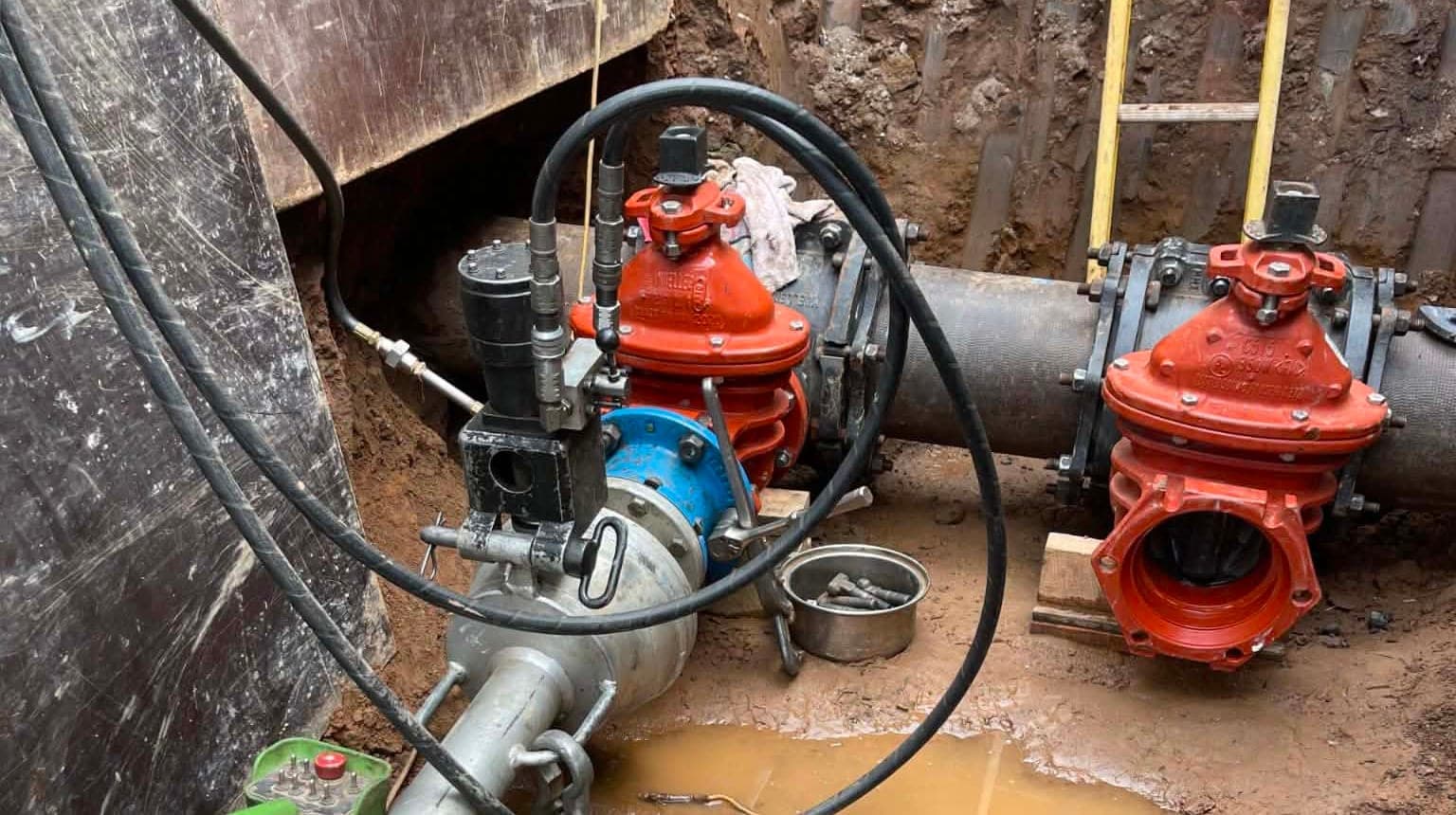
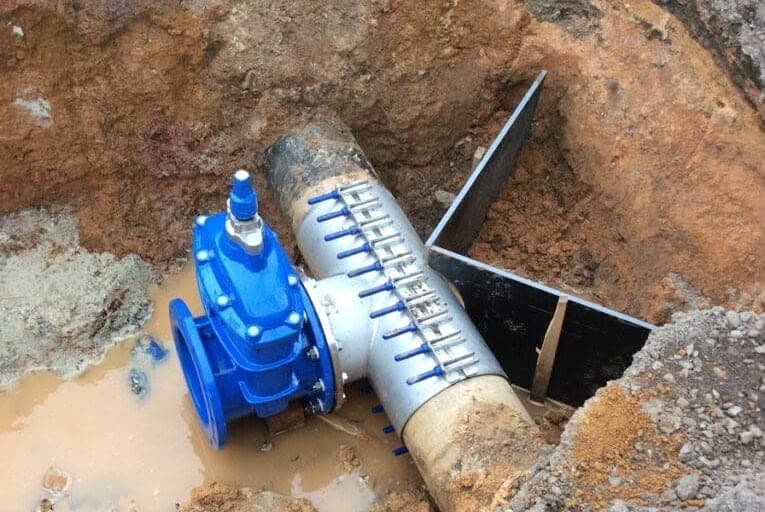
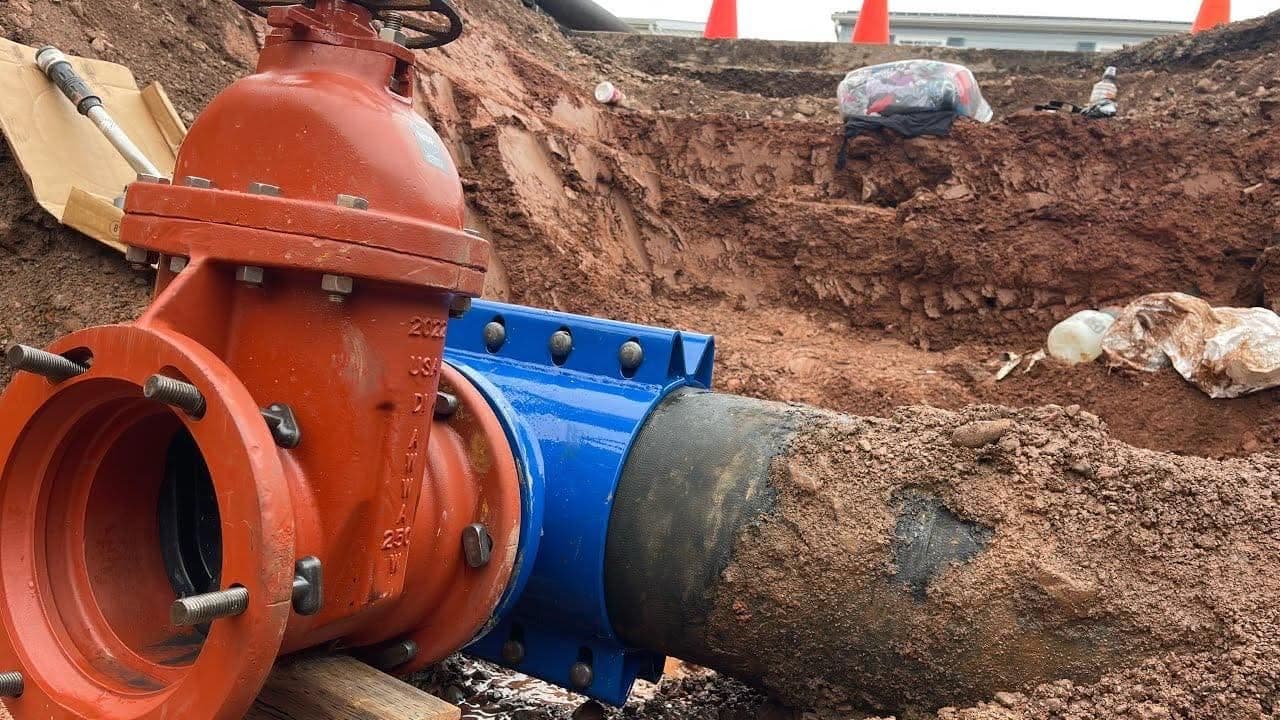
A hot tap connects a new line to a water main that is still pressurized and in service. A split steel collar called a tapping sleeve is bolted around the outside of the live main. A tapping valve bolts to that sleeve, and a tapping machine mounts to the valve and drills through the pipe wall while every drop of pressure stays contained inside the machine. The disc of pipe cut out — the coupon — is held by a retaining pilot so it can never drop into the main and travel downstream. When the drill retracts, the valve closes and you are left with a permanent, valved connection. Nobody on that line ever lost water.
When You Need It
Every ground-up commercial building needs at least one tap, and most need two — one for domestic water and a separate, larger one for the fire sprinkler system. You also need one when a tenant’s use changes and the existing service can no longer supply it: a restaurant, brewery, laundry, car wash, or medical suite going into a shell built for retail. A hot tap specifically is what you want any time the customers on that main cannot go without water — a hospital, school, apartment community, food plant, or occupied shopping center — because taking a public main out of service is not a decision a contractor gets to make on his own, and a depressurized main can trigger a precautionary boil-water advisory for everyone on it.
What Drives the Cost
Two separate buckets, and owners are routinely surprised by the second one. The contractor scope — excavation, shoring, sleeve, valve, testing, backfill, and restoration — is priced off the site, because depth, main material, traffic control, and pavement repair swing it further than tap size does. The second bucket is the water authority’s own fees, and those are the owner’s cost no matter who does the work: a tap fee that climbs with tap size, a meter fee, and a non-residential capacity fee that scales with meter size and on a large service can dwarf everything else about the connection. Greenville Water publishes its schedule, Easley Combined Utilities publishes its own, and so does every authority we work under across the line in North Carolina and Georgia. We pull the current numbers against your actual meter size and build them into the estimate rather than leaving you to discover them at permit time. The tap itself is roughly a two-hour operation once the pit is open; the full field sequence is typically one to three days. The schedule driver is paperwork, not digging — in South Carolina an SC811 ticket runs three to ten working days, North Carolina and Georgia run their own 811 centers on their own clocks, and the water authority’s review and inspection queue is measured in weeks in any of the three.
Why It Matters Here
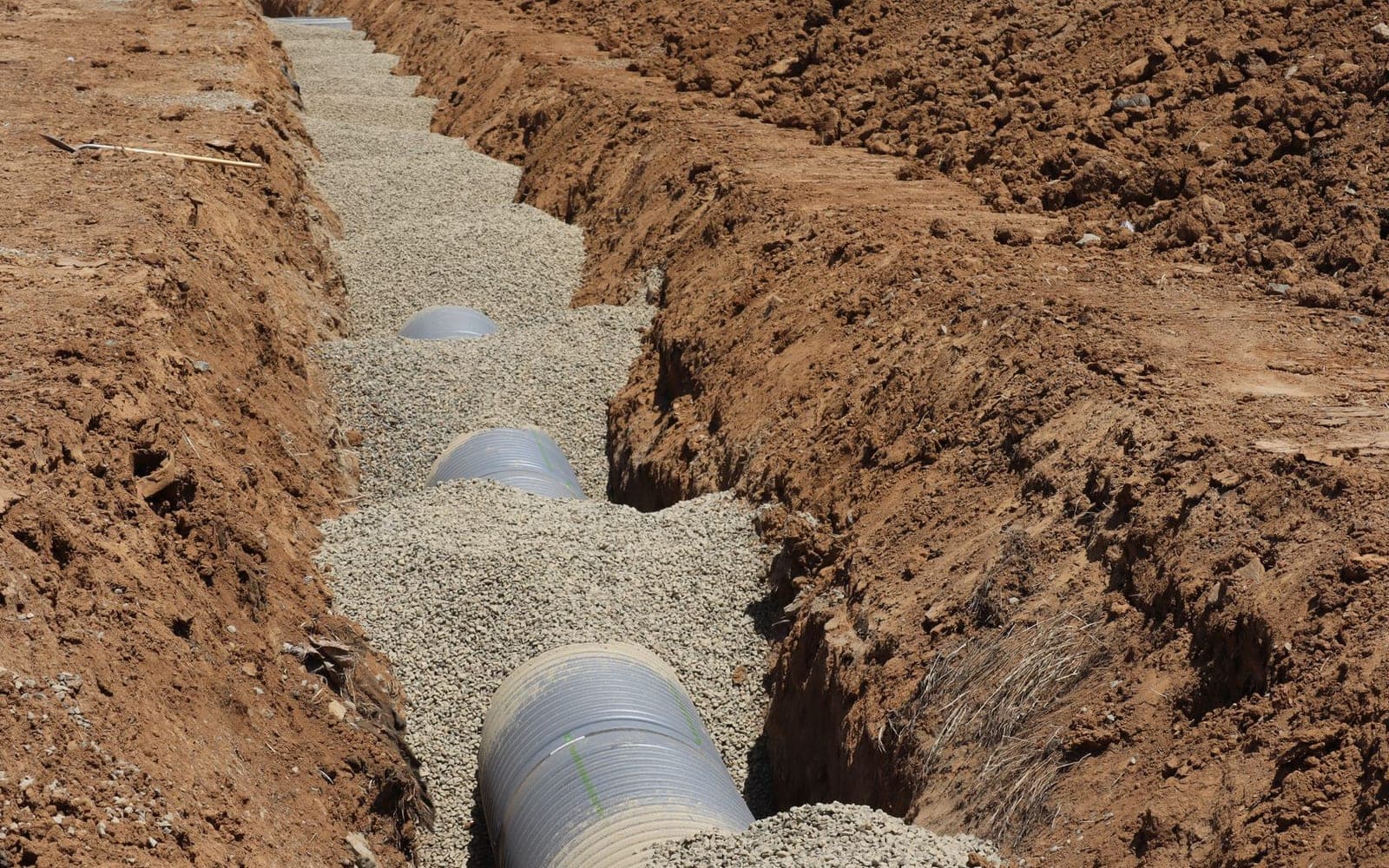
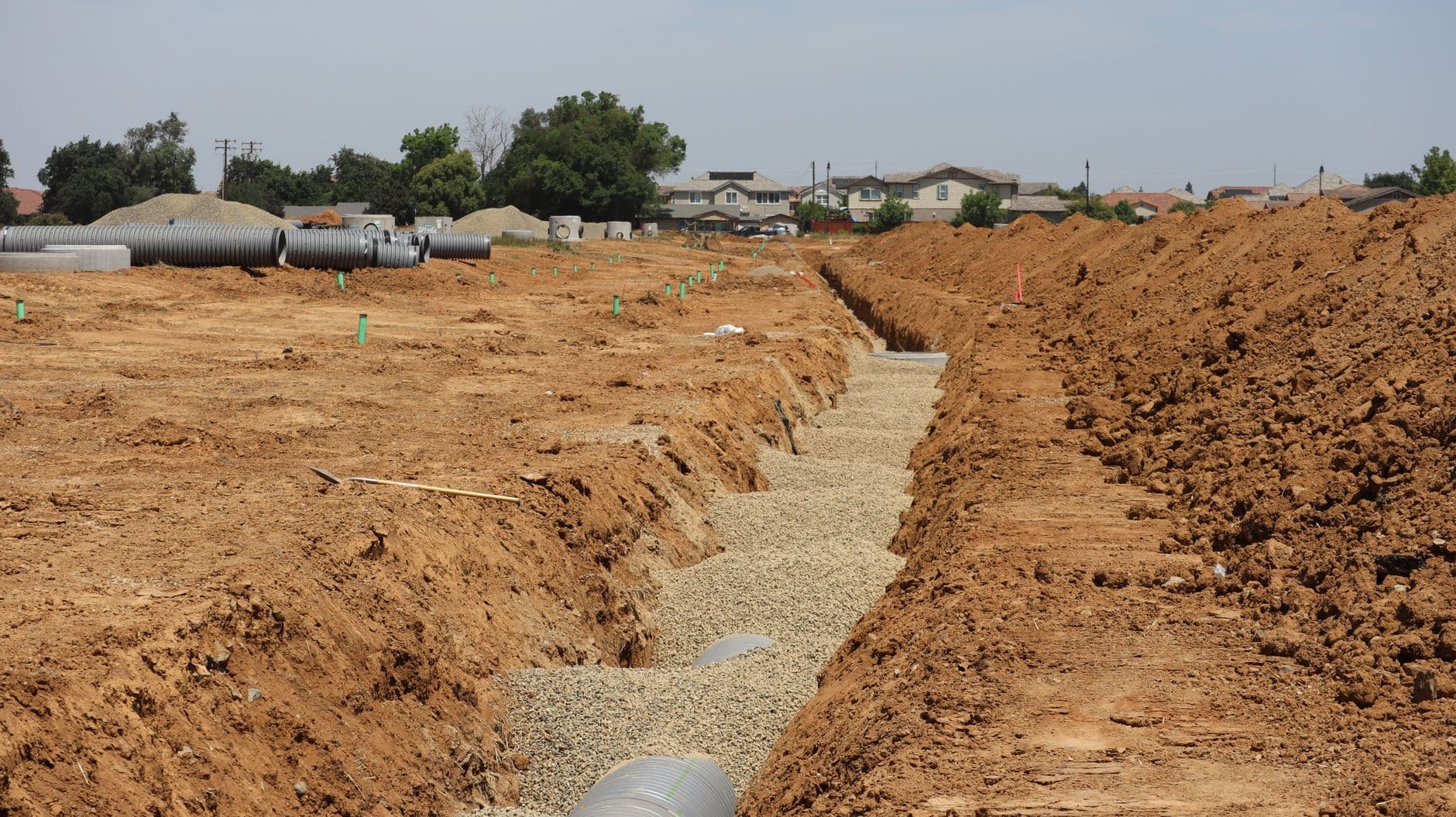
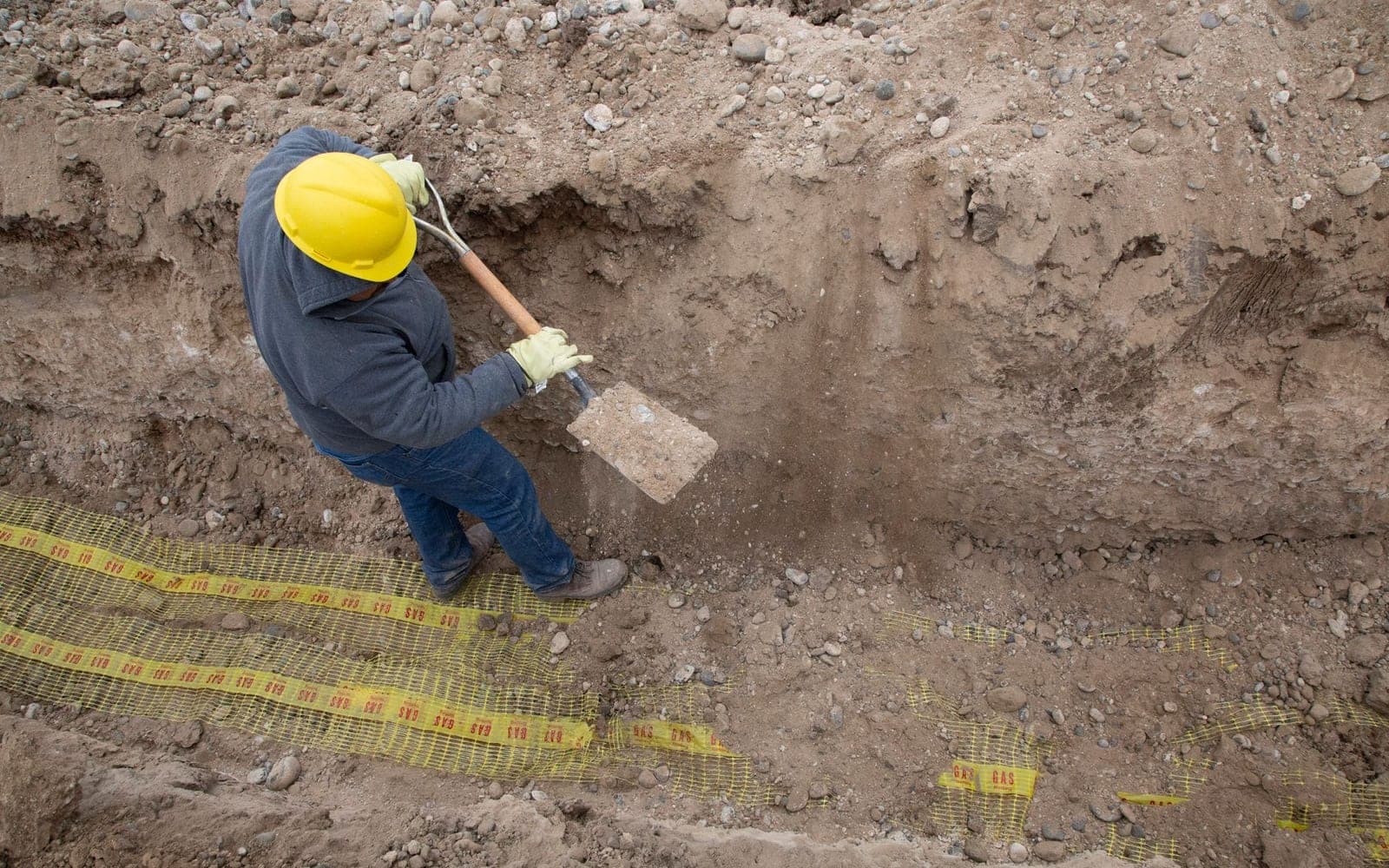
Our crews run out of Easley, and everything within reach of that shop sits in the Piedmont — red clay that drains slowly and is prone to shrink and swell, the same from the Greenville suburbs out to the Georgia and North Carolina lines. A trench wall that stood up fine on a dry Tuesday can slough after Thursday’s rain, so shoring is a live safety decision on every tap pit, not a box to check. Closer to the Blue Ridge foothills, granite and gneiss bedrock sit near the surface, which turns a routine trench into hammer work. What changes most from job to job is who owns the main. Greenville Water, Easley Combined Utilities, Anderson Regional, Seneca Light & Water, and the small districts on either side of the state line each run their own application, approved-materials list, inspector, and fee schedule — and crossing into North Carolina or Georgia changes the permitting path, not just the letterhead. We are licensed in all three states, so the first move on any tap is establishing whose rulebook you are actually building to. Knowing that before design is worth more than any trick in the field.
Water Main Taps & Hot Taps Gallery
Warning
Signs
Somebody proposes to "just shut the main down"
Depressurizing a public main is the water authority’s call, not the contractor’s. It affects every customer on that segment and can trigger a precautionary boil-water advisory. If nobody on the job can tell you who notified the authority and when, stop the work.
No pressure test on the sleeve before the pipe is cut
The sleeve and valve assembly gets tested through a test port before the drill ever touches the main. Testing after the coupon is out is too late — you have already opened a live main into an unproven joint. If there is no test pump or gauge on site, nothing is being tested.
The sleeve was rotated or walked into position on the pipe
Sleeve manufacturers are explicit that rotating a mounted sleeve pulls the gasket out of its groove and ruins it. The leak that creates does not show up that day — it shows up months later, under new pavement.
Bolts run up with an impact wrench and no torque wrench
Tapping sleeve bolts are torqued to a specified value in a specified sequence, from the center outward, alternating sides. Improper torque produces a leaking assembly or damages the pipe wall, and improper blocking under the sleeve makes correct torque impossible in the first place.
Petroleum grease on the gasket
Only water-soluble lubricant belongs on a sleeve gasket. Oil-based lubricants leave a film that interferes with the seal. It is a small tube of the wrong product and a trench you get to dig twice.
Crew in a trench over five feet deep with no box or shoring
OSHA requires a protective system at five feet and deeper unless you are in stable rock, with a competent person inspecting daily. At twenty feet the system has to be engineered. This is the most-cited fatal hazard in underground work, and Piedmont clay changes behavior with the weather.
Old grey pipe with a fibrous, cement-like wall
That is likely asbestos-cement main, common in mid-century water systems all through this region. Tapping it, cutting it, and disposing of it are regulated activities with worker-protection requirements. It belongs on the schedule and the budget, not discovered at 2pm on a Friday.
Maintenance
Tips
Our
Process
Application & Utility Coordination
Submit the tap application to the water authority, pay tap, capacity, and meter fees, and get size and location approved — taps over two inches usually mean the owner furnishes the tapping materials.
Engineering & Permitting
Sealed plans where required, then SC DES construction permitting or the authority’s delegated review in South Carolina — the equivalent state review across the line in North Carolina or Georgia — plus encroachment and traffic control permits if the tap falls in a right-of-way.
Locate & Pothole
An 811 ticket ahead of the dig — three to ten working days under SC811, whatever the neighboring state requires when the job is over there — verify the marks, then physically expose the main to confirm its real size, material, and depth before anyone orders a sleeve.
Excavate & Shore
Open the tap pit and install a protective system at five feet and deeper — trench box, shoring, or sloping — with a competent person inspecting daily.
Set the Tapping Sleeve
Clean the main, set the split sleeve without rotating it, use water-soluble lubricant only, and torque the bolts from the center outward to the manufacturer’s value.
Test Before Cutting
Bolt on the tapping valve and pressure-test the sleeve assembly through its test port — before the drill ever touches the main. No leak is acceptable.
Make the Tap
Mount the tapping machine, advance the cutter, take the coupon, confirm the retaining pilot has it, retract fully, and close the valve. The main stays in service throughout.
Tie In, Backfill & Restore
Connect the branch with restrained joints or thrust blocking, set the valve box to grade, backfill in compacted lifts with tracer wire and marking tape, then restore pavement and landscaping to the authority’s standard.
What Drives the Number
Prices are estimates for Upstate SC — get a real quote for your project.
FAQ
Explore More
Get Your
Quote
Call us directly or request a quote online. No pressure, no upselling — just honest answers about your water main taps & hot taps needs.
(864) 304-0139