
Sized, Set, Plumbed
and Inspection-Ready
Fats, oils, and grease float. A grease interceptor is a tank that slows kitchen wastewater down enough for grease to rise and food solids to sink, so only the clean middle layer continues to the sewer or septic system. Get it undersized, badly plumbed, or unmaintained and you get blocked laterals, a failed inspection, and a certificate of occupancy that will not issue. RO Unlimited sizes them to the reviewing authority’s method, sets them, and hands you a system that passes.
Commercial Grease Traps & Interceptors
Guide
What It Is
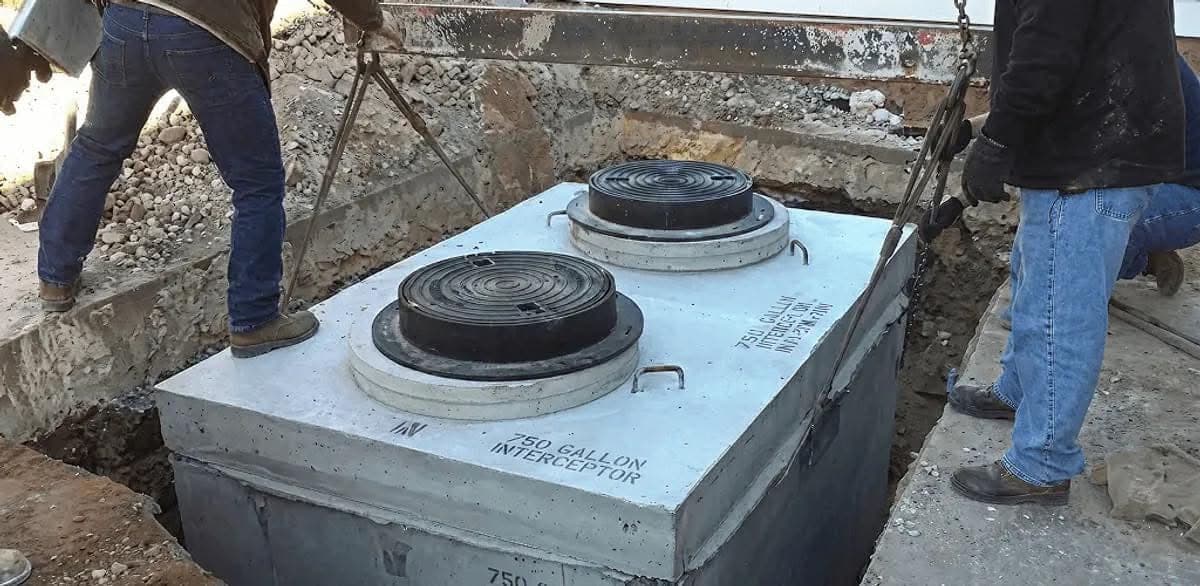
Two different pieces of equipment get called the same thing. The small stainless or plastic box under a sink is properly a hydromechanical interceptor — a grease trap — and it is rated in gallons per minute of flow. The large in-ground concrete tank outside, typically 1,000 to 3,000 gallons, is a gravity grease interceptor, rated in gallons of capacity. South Carolina is blunt about which one a commercial kitchen on septic needs: an interior unit may not be used in place of a properly sized exterior grease trap. Grease matters because it is the single most common cause of sewer blockages — the EPA has put it at 47% of reported blockages — which is why nearly every sewer authority runs a formal program with sizing rules, inspections, and penalties.
When You Need It
Any new food service facility — the plumbing code lists restaurants, hotel kitchens, hospitals, school kitchens, bars, factory cafeterias, and clubs. Any kitchen fit-out or menu change that adds fryers or a dishwasher, because that changes the sizing basis. Any existing facility that has had a grease-caused malfunction, at which point South Carolina requires immediate compliance as though it were a brand new facility. And on septic, any food service facility served by an onsite system, full stop. Which rulebook applies depends on where your waste goes and which state you are in: on sewer it is your local pretreatment authority, and on septic it is that state’s onsite wastewater regulation — South Carolina’s is considerably more prescriptive than most people expect.
Sizing, Budget & Lead Time
Tank size sets the floor, and tank size comes out of whichever sizing method your authority accepts — so settle that before anyone prices a tank. From there the spread is driven by whether the lids have to be traffic-rated, excavation depth and whether you find rock, the run from the kitchen to the tank, whether a sample manhole is required, and whether the parking lot has to be cut and put back. An under-sink hydromechanical trap is a fixture-level purchase. An exterior in-ground interceptor is a site job with a crane on it, and those are not the same order of magnitude. Plan review with the sewer authority is typically two to six weeks; the install itself is usually one to three days of site work once the tank is on site. The critical path is almost always the precast lead time, so order early — a tank sitting in a yard three counties away has held up more certificates of occupancy than any inspector ever has.
Why It Matters Here
Every authority around here runs a real program with real paperwork, and no two of them are the same. ReWa, the regional authority for the Greenville area we work out of, requires a submittal review form with flow calculations and enrollment in a FOG register where you upload your maintenance manifests — free, but mandatory. OJRSA, covering Seneca, Walhalla, and Westminster out in Oconee, publishes standard details for grease traps, interceptors, and oil-water separators along with a sizing workbook and a sewer use regulation. Cross into North Carolina or Georgia and you are under a different pretreatment ordinance that may size the tank a different way entirely — which is why nobody should price a tank before the governing authority is settled. Restaurants on septic get hit twice: they need both a grease trap and a commercial septic system, and South Carolina prohibits mound systems for facilities requiring grease traps, which closes off the usual workaround on poor soils. One more South Carolina wrinkle worth knowing: since July 2024 the retail food permit comes from the Department of Agriculture, while the septic and grease side sits with SCDES.
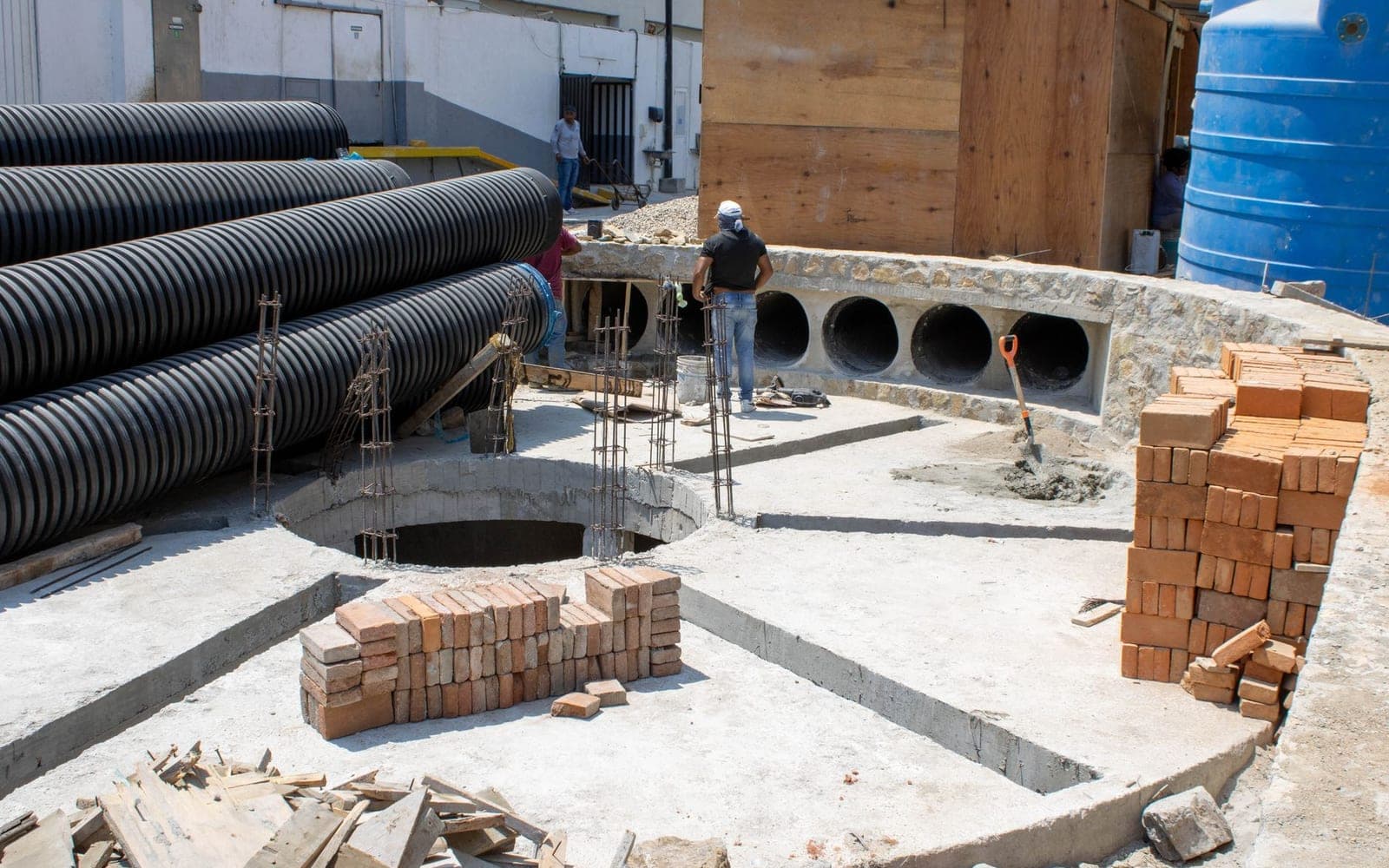
Commercial Grease Traps & Interceptors Gallery

Warning
Signs
Grease turning up downstream — in the lateral, the septic tank, or a slow floor drain
The interceptor has stopped separating. Usually a full unit, a broken baffle, or a tee that has been knocked off. By the time you see it downstream, grease is already coating pipe or drainfield soil where it cannot be flushed out.
Grease and solids past about a quarter of the liquid depth
This is the industry 25% rule. Past that point incoming flow short-circuits the baffles and pushes grease straight through as if the unit were not there. Most restaurants reach it in one to three months, not annually.
A non-traffic-rated lid where vehicles can reach it
An H-20 rating means a 16,000 pound wheel load with a safety factor applied on top. A standard lid on a delivery route is a collapse waiting to happen — a genuine life-safety issue, not a maintenance item.
Anyone selling enzymes or emulsifiers as a substitute for pumping
The plumbing code prohibits discharging emulsifiers, chemicals, or enzymes to a grease interceptor. They do not remove grease — they liquefy it so it passes through your interceptor and congeals in the public sewer, which is precisely what the ordinance exists to prevent.
A garbage disposal plumbed into the kitchen line
The code is explicit that a food waste disposer shall not discharge to a grease interceptor, and South Carolina’s septic rule agrees. Solids overwhelm the unit and destroy the retention time it depends on.
No sample port, no risers to grade, or a unit nobody can open
If an inspector cannot sample or inspect it, you are in violation regardless of how well it actually works. South Carolina requires grease traps be directly accessible from the surface with a minimum eighteen-inch access opening.
Maintenance
Tips
Our
Process
Confirm Which Authority Governs
The local sewer and pretreatment authority if you are on sewer; that state’s onsite wastewater regulation if you are on septic — and it matters which of the three states the job is in, because they size differently.
Size the Unit
Using the method that authority accepts — the plumbing code’s 30-minute retention rule, a meals-per-peak-hour formula, fixture unit tables, or the state formula for systems on septic.
Submit for Plan Review
Forms, flow calculations, and a site map showing the connection point — and enrollment in the authority’s FOG register where one exists.
Separate the Plumbing at Rough-In
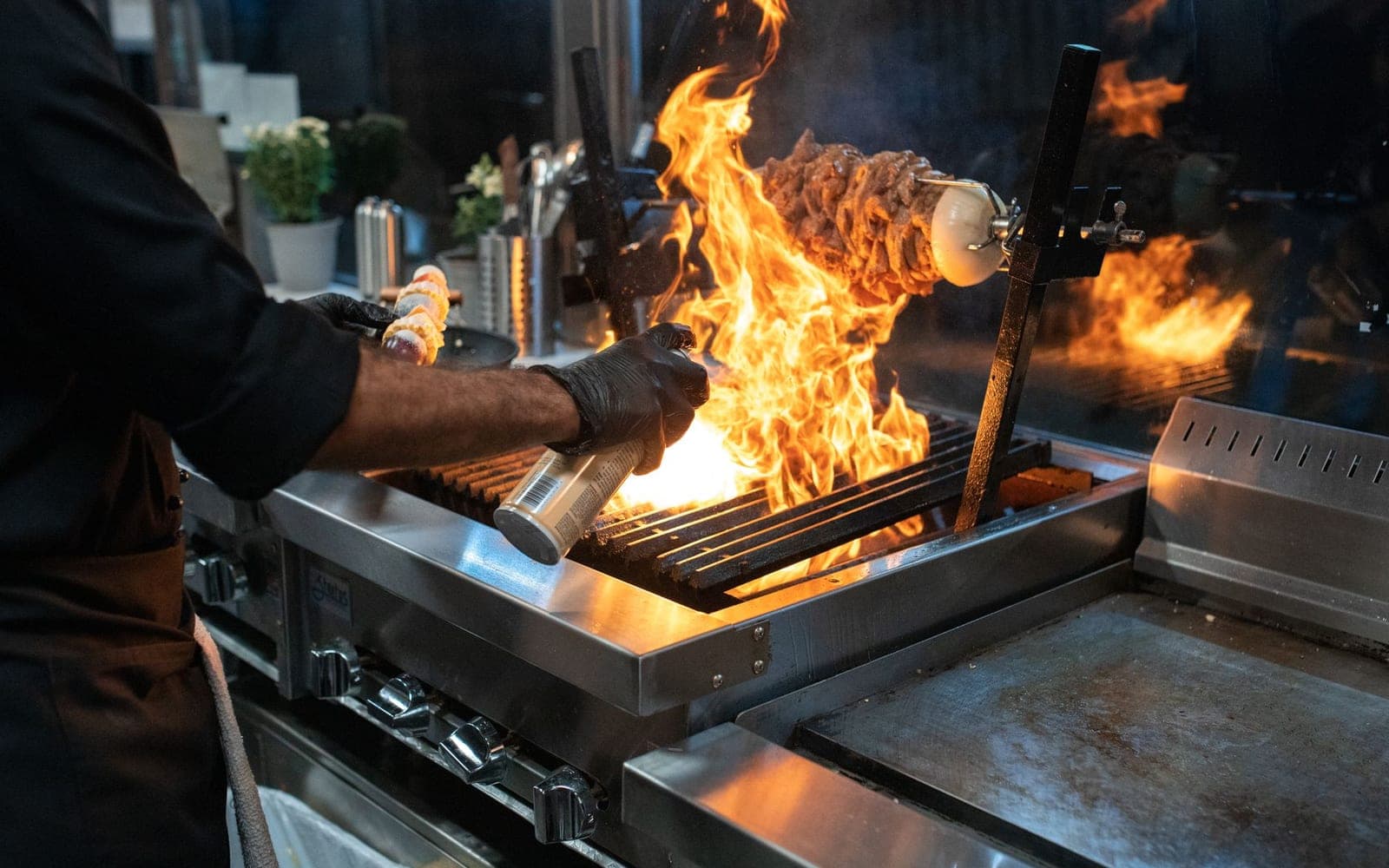
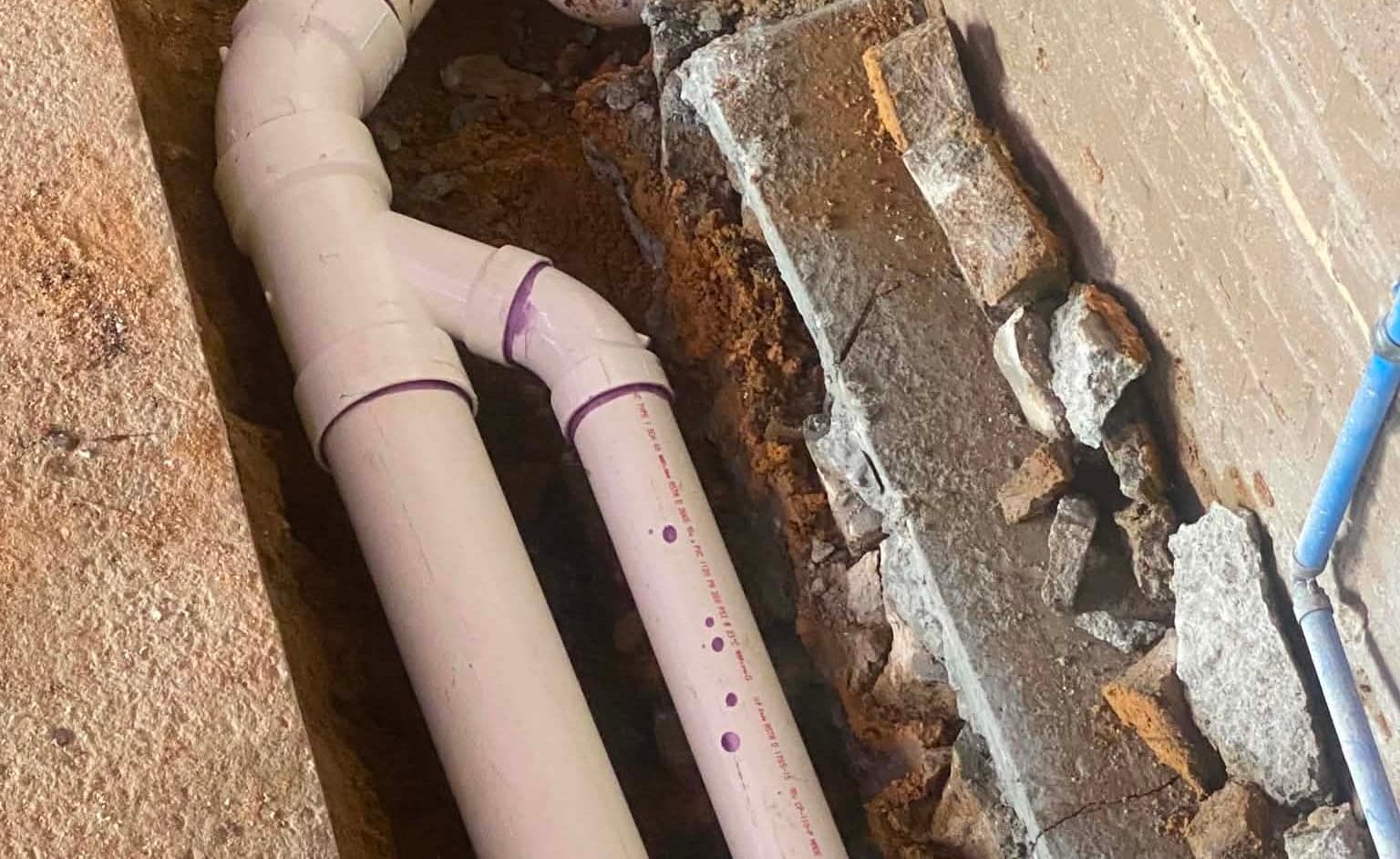
Kitchen waste routed to the interceptor, restrooms bypassing it straight to the sewer or septic tank, and no food waste grinder anywhere upstream.
Excavate & Set the Tank
On proper bedding, dead level, with traffic-rated lids anywhere a vehicle can reach — decided during design, because retrofitting after paving is far more expensive.
Install Internals & Access
Inlet and outlet tees or baffles, flow control, risers brought to grade, and the sample port where the authority requires one.
Inspect Before Backfill
Pass inspection with everything visible, then backfill and restore the surface. An inspector cannot approve what has already been buried.
Start the Maintenance Log Day One
Measure the first pump-out interval rather than guessing it, then lock it into a service contract before the first blockage rather than after.
What Drives the Number
Prices are estimates for Upstate SC — get a real quote for your project.
FAQ
Explore More
Get Your
Quote
Call us directly or request a quote online. No pressure, no upselling — just honest answers about your commercial grease traps & interceptors needs.
(864) 304-0139